



Introduction
If you work in cold storage, outdoor construction, or any freezing environment, keeping your hands warm isn‘t just about comfort—it’s about safety and productivity. Cold exposure can reduce finger dexterity by up to 50% within minutes, dramatically increasing the risk of handling errors, dropped tools, and workplace injuries. According to NIOSH data, more than 75% of cold-related workers‘ compensation claims involve frostbite of the extremities, with hands being among the most vulnerable. OSHA emphasizes that using proper personal protective equipment (PPE), including thermal gloves, is essential for reducing cold stress risks in the workplace.
The right cold resistant work gloves provide the insulation, grip, and flexibility needed to work effectively while protecting against frostbite and cold stress. Whether you need acrylic cold resistant work gloves for extreme insulation, latex-coated cold resistant work gloves for superior grip in wet conditions, or lightweight cold resistant work gloves for tasks requiring fine motor control, choosing the right pair makes all the difference. In this guide, we’ll explain what makes a quality cold resistant work glove, how to select the best one, and why acrylic looped pile liners combined with latex crinkle coatings offer the optimal balance of warmth, durability, and grip.
Understanding Cold Resistant Work Gloves: What Makes Them Effective
Cold resistant work gloves are specially designed PPE that protects hands from low-temperature hazards while allowing sufficient dexterity for manual tasks. Unlike standard winter gloves, work-grade cold resistant gloves must meet specific safety standards, including EN 511 certification for cold protection. EN 511 specifies testing methods and performance levels for gloves against cold hazards, including convective cold and contact cold.
The EN 511 standard evaluates three critical properties: resistance to convective cold (level 0–4), resistance to contact cold (level 0–4), and water penetration. To receive any cold protection rating, gloves must first achieve at least level 1 in EN 388 mechanical tests for abrasion and tear resistance. This ensures that durable cold resistant work gloves don‘t sacrifice mechanical protection for warmth.
At the heart of effective cold resistant gloves is the liner material—the layer that traps body heat and keeps cold air out. The most effective liners for cold resistant work gloves are made from acrylic looped pile, a specialized knit construction that creates thousands of tiny air pockets to retain heat. The X.Z(NANTONG)CO,LTD product, for example, features a 10-gauge acrylic knitted shell with soft looped-pile lining for superior warmth and heat retention. The “10-gauge” refers to the knitting density—lower gauge numbers indicate thicker, warmer liners, with 10-gauge striking the optimal balance between insulation and dexterity.
Key Features of Premium Cold Resistant Work Gloves
1. Acrylic Looped-Pile Lining – Superior Heat Retention
The most critical feature of any acrylic cold resistant work glove is the liner. Acrylic looped-pile construction differs significantly from standard fleece or cotton liners. The loops in the pile create trapped air spaces that act as insulation, keeping body heat close to the skin while blocking cold air from penetrating. Napped acrylic liners make hands feel significantly warmer in cold conditions.
A 10-gauge acrylic liner provides an ideal thickness for cold weather work—substantial enough to retain heat yet flexible enough to maintain hand mobility. The textured loops also provide a soft interior surface that reduces friction and prevents irritation during extended wear. As one industry description notes, the soft acrylic loop pile liner provides comfort and protection against the cold while being anatomically engineered to reduce hand fatigue.
The acrylic material itself offers advantages over cotton or polyester in lightweight cold resistant work gloves. Acrylic fibers dry quickly, resist moisture absorption, and maintain their insulating properties even when damp—a critical benefit for workers in cold, humid environments like cold storage facilities or outdoor winter construction sites.
2. Latex Crinkle Coating – Superior Grip in All Conditions
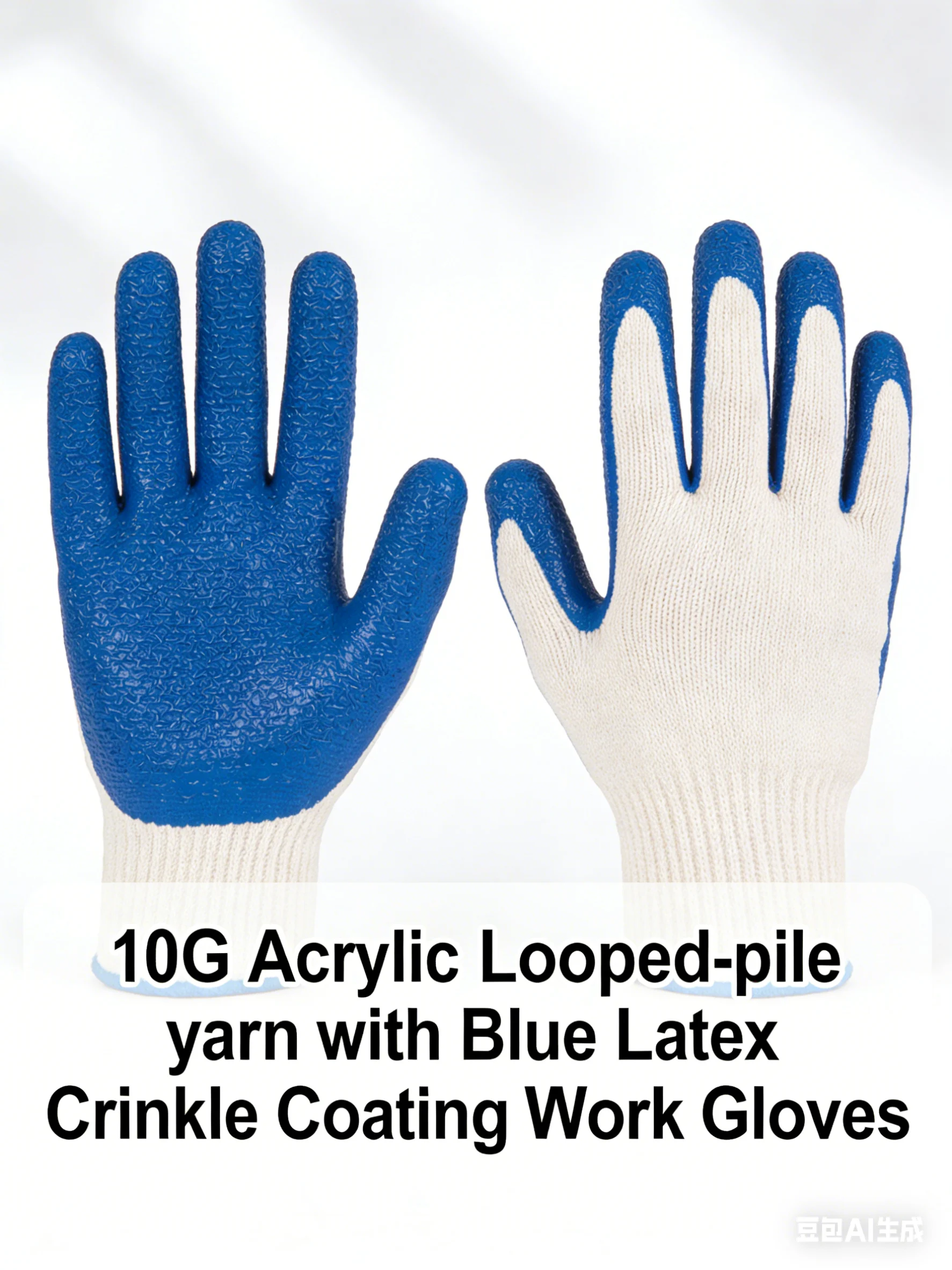
The coating on latex-coated cold resistant work gloves transforms them from simple insulators into versatile work tools. The blue latex crinkle coating provides outstanding grip, wear resistance, and stability in dry, wet, and oily conditions. The crinkled texture amplifies tactile control in slippery or high-friction environments, outperforming standard dipped gloves.
Crinkle latex coatings offer several distinct advantages:
-
Enhanced grip in wet and oily conditions: The textured surface channels liquids away from contact points, maintaining friction even on slippery surfaces.
-
High abrasion resistance: Latex coatings provide excellent durability against wear and tear, extending glove lifespan.
-
Flexibility without sacrificing protection: Unlike rigid coatings, latex remains flexible, allowing for a full range of hand motion.
This combination of thermal insulation and wet-grip capability makes latex coated cold resistant work gloves ideal for applications ranging from cold storage material handling to winter construction and maintenance.
3. Durable Cold Resistant Work Gloves – Engineered for Long Service Life
Durable cold resistant work gloves must withstand the rigors of daily industrial use while maintaining their protective properties. The X.Z Safety product achieves this through its 10-gauge acrylic knitted shell construction, which provides inherent strength and resistance to tearing. The palm and back coating area extends across both sides of the glove, offering comprehensive protection for the entire hand.
Durability also comes from coating quality. Latex coatings with crinkle finishes resist cracking and peeling better than smooth coatings, maintaining grip performance over hundreds of use cycles. Additionally, the elastic knit wrist cuff provides a snug fit that keeps out cold air and debris while preventing the glove from slipping during work.
4. Comfortable Cold Resistant Work Gloves – Reducing Hand Fatigue
Comfortable, cold resistant work gloves allow workers to wear them for full shifts without discomfort or fatigue. Key comfort factors include:
-
Anatomically engineered fit: Gloves designed to match the natural shape of the hand reduce pressure points and improve circulation.
-
Breathability: The knit construction of acrylic liners allows moisture vapor to escape, preventing sweat buildup that can lead to chilling.
-
Flexible coating: Latex coatings remain pliable even in low temperatures, unlike some synthetic coatings that stiffen and restrict movement.
-
Seamless construction: Knit gloves have no internal seams that can irritate fingers during extended wear.
Properly fitting, comfortable cold resistant work gloves also improve safety by reducing the tendency to remove gloves for tasks requiring fine motor skills—a common cause of cold-related hand injuries.
5. Lightweight Cold Resistant Work Gloves – Maintaining Dexterity
One of the biggest challenges in cold weather work is maintaining finger dexterity while keeping hands warm. Heavy, bulky gloves protect against cold but make it impossible to handle small parts, operate controls, or perform precise tasks. Lightweight cold resistant work gloves solve this problem through thoughtful material selection and construction.
The 10-gauge acrylic knit achieves warmth without excessive bulk because the looped-pile structure traps heat efficiently using less material. The lightweight design allows workers to maintain tactile sensitivity while staying protected. This makes lightweight cold resistant work gloves particularly suitable for applications like:
-
Industrial assembly and manufacturing
-
Logistics, warehousing, and material handling
-
Gardening and farming operations
-
Transportation and loading work

Key Benefits at a Glance
| Benefit | How It Works |
|---|---|
| Superior heat retention | Acrylic looped-pile lining creates trapped air pockets; 10-gauge construction provides ideal insulation thickness. |
| All-conditions grip | Latex crinkle coating channels liquids and maintains friction in wet, dry, and oily environments |
| Cold safety compliance | Meets EN 511 standards for convective and contact cold protection with required EN 388 mechanical ratings |
| Long-lasting durability | Crinkle latex resists cracking; 10-gauge knit provides tear resistance and shape retention. |
| All-day comfort | Anatomically engineered fit reduces hand fatigue; seamless construction prevents irritation. |
| Versatile applications | Suitable for cold storage, construction, mining, logistics, oil and gas, transportation |
| Windproof performance | Dense acrylic knit blocks wind penetration while maintaining breathability |
| Customizable options | Sizes XS–2XL; color, coating pattern, and impact protection available per request |
Industry Applications for Cold Resistant Work Gloves
The versatility of acrylic cold resistant work gloves with latex coating makes them suitable for a wide range of cold-environment occupations. The X.Z Safety product is specifically designed for applications including:
Cold Storage and Freezer Work
Workers in cold storage facilities face prolonged exposure to temperatures often below -20°C/-4°F. Standard gloves quickly lose insulating properties in these extreme conditions. Acrylic looped-pile cold resistant work gloves maintain their thermal performance even in sustained cold exposure, while latex coatings provide a secure grip on frozen packaging and equipment.
Outdoor Winter Construction and Maintenance
Construction work doesn‘t stop when temperatures drop. From framing to concrete work to road maintenance, winter construction demands cold resistant work gloves that combine warmth with grip and durability. The latex crinkle coating performs especially well on wet scaffolding, icy tools, and cold metal surfaces.
Logistics, Warehousing, and Material Handling
Loading docks and unheated warehouses can be as cold as outdoor environments. Workers handling boxes, pallets, and equipment need latex-coated cold resistant work gloves that allow them to maintain grip and control while staying warm. The lightweight design ensures dexterity for scanning barcodes, operating equipment, and handling paperwork.
Mining, Oil, and Gas Industrial Work
Remote extraction sites often operate in extreme cold conditions, sometimes for weeks at a time. Durable cold resistant work gloves must withstand abrasive surfaces, heavy materials, and harsh weather while keeping hands functional. The combination of acrylic thermal liner and abrasion-resistant latex coating makes these gloves well-suited for such demanding environments.
Industrial Assembly and Manufacturing
Unheated manufacturing facilities and assembly lines can become dangerously cold during the winter months. Workers performing precision assembly tasks need comfortable, cold resistant work gloves that won‘t compromise their ability to handle small components. The lightweight acrylic construction provides warmth without sacrificing the tactile sensitivity required for fine motor tasks.
Transportation and Loading Work
Truck drivers, freight loaders, and delivery personnel work in and out of vehicles throughout the day, experiencing constant temperature changes. Lightweight cold resistant work gloves allow them to transition between warm cabs and cold loading docks without removing gloves or losing grip on cargo.
Cold Resistant Work Gloves: Material Comparison
| Feature | Acrylic Looped-Pile | Cotton Fleece | Polyester | Wool |
|---|---|---|---|---|
| Thermal insulation | Excellent – trapped air pockets | Poor – absorbs moisture | Good – dries quickly | Excellent – natural crimp |
| Moisture management | Good – low absorption | Poor – becomes heavy when wet | Excellent – hydrophobic | Good – wicks naturally |
| Durability | Good – resists abrasion | Poor – wears quickly | Good – strong fibers | Fair – prone to felting |
| Drying speed | Fast | Very slow | Fastest | Moderate |
| Cost | Moderate | Low | Low | High |
| Allergenic potential | Low | Low | None | Moderate for some |
| Best for | Extended cold exposure, industrial work | Short-term, dry cold | Wet cold conditions | Extreme cold, limited dexterity needs |
For most industrial cold-weather applications, acrylic cold resistant work gloves offer the best combination of thermal performance, durability, and cost-effectiveness. The looped-pile construction specifically provides warmth comparable to wool without the higher cost or potential allergen concerns.
Latex Crinkle Coating Performance by Environment
The crinkled latex coating on latex-coated cold resistant work gloves performs differently across working conditions. Here‘s how it rates:
| Work Environment | Grip Performance | Durability | Suitability |
|---|---|---|---|
| Dry conditions (construction, assembly) | Excellent – maximum friction | Good – minimal wear | Highly suitable |
| Wet conditions (cold storage, outdoor rain) | Excellent – channels water away | Good – coating intact | Highly suitable |
| Oily/greasy conditions (automotive, industrial) | Superior – texture grips through oil film | Good – oil doesn‘t degrade latex | Highly suitable |
| Icy/snowy conditions | Excellent – grip on frozen surfaces | Good – flexible in cold | Suitable |
| Abrasive surfaces (rough concrete, stone) | Good – coating withstands abrasion | Good – but not cut-rated | Suitable for inspection |
| Chemical exposure | Poor – latex degrades with many chemicals | Poor – not chemically resistant | Not suitable |
For most cold-environment industrial work, latex crinkle coatings provide reliable performance. However, users handling chemicals should consult safety data sheets to ensure compatibility with latex materials.
Cold Stress Prevention in the Workplace
Understanding the health risks of cold exposure reinforces why proper cold resistant work gloves are essential PPE. Cold stress occurs when the body can no longer maintain its core temperature, leading to serious conditions including hypothermia, frostbite, trench foot, and chilblains.
The CDC recommends multiple preventive measures for cold-weather work:
-
Provide warm liquids to workers
-
Establish warm areas for use during breaks
-
Limit time outside on extremely cold days
-
Monitor workers at risk of cold stress
-
Provide cold stress training
Workplace safety organizations emphasize that selecting the right gloves is a critical component of cold stress prevention. Employers should choose gloves with thermal insulating materials that can be operated while worn, allowing workers to maintain hand protection throughout their shift.
The CCOHS specifically advises selecting appropriate gloves, hats, socks, footwear, and eye protection for cold working conditions. For hand protection, this means cold resistant work gloves with adequate insulation for the expected temperature range and work duration.
Cold Resistant Work Gloves vs. Standard Winter Gloves
| Feature | Cold Resistant Work Gloves | Standard Winter Gloves |
|---|---|---|
| Purpose | Occupational safety – PPE for work environments | Consumer comfort – casual cold-weather wear |
| Safety standards | Meets EN 511 and EN 388 requirements | No third-party safety certification |
| Grip performance | Crinkle latex coating for wet/oily/dry grip | Smooth or textured fabric – limited grip |
| Durability | Abrasion-resistant coatings, reinforced seams | Not designed for heavy wear or tool handling |
| Dexterity | 10-gauge lightweight design maintains finger mobility | Often bulky, limiting fine motor control |
| Coating coverage | Palm and back – full hand protection | Usually, no coating or minimal grip patches |
| Temperature rating | Tested to specific standards (convective/contact cold) | Manufacturer claims only – no standardized testing |
| Workplace compliance | OSHA-recommended for cold work environments | Not recognized as occupational PPE |
For any job requiring hand protection in cold environments, cold resistant work gloves that meet EN 511 standards are necessary. Standard winter gloves do not provide the mechanical protection or certified thermal performance required for workplace safety.
How to Choose the Right Cold Resistant Work Gloves
Selecting the best cold resistant work gloves for your specific application requires evaluating several factors:
Assess the temperature and duration of cold exposure. For sustained work below -10°C/14°F, thicker 10-gauge acrylic liners are appropriate. For intermittent cold exposure, lighter options may suffice.
Consider moisture conditions. For wet or humid work environments, latex-coated cold resistant work gloves with crinkle finishes provide the necessary grip. The coating also provides some liquid repellency, keeping hands drier.
Evaluate the grip requirements. For tasks involving slippery surfaces, oily parts, or wet materials, crinkled latex coatings significantly outperform smooth finishes or uncoated gloves.
Check safety certification requirements. Many workplaces require EN 511-rated cold resistant work gloves for cold environment tasks. Ensure your gloves meet the required performance levels for your specific hazards.
Match size and fit. Cold resistant gloves must fit properly to provide adequate insulation. Gloves that are too tight compress the liner, reducing its insulating properties. Gloves that are too loose allow cold air circulation. X.Z Safety offers sizes from XS to 2XL to accommodate various hand dimensions.
FAQ
Q1: What temperature range are cold resistant work gloves rated for?
Cold resistant work gloves tested to EN 511 can protect in temperatures as low as -50°C, depending on the performance level achieved. Actual safe use temperature depends on exposure duration and conditions.
Q2: How do I know if my cold resistant work gloves meet safety standards?
Look for EN 511 markings on the glove or product documentation. EN 511 requires three test results: convective cold (0–4), contact cold (0–4), and water penetration (pass/fail).
Q3: Can I wash and reuse cold resistant work gloves?
Yes, most acrylic and latex cold resistant gloves can be gently washed and air-dried. Follow manufacturer instructions. Avoid high-heat drying, which can damage the latex coating and shrink the acrylic liner.
Q4: What’s the difference between cold resistant and waterproof gloves?
Cold resistant gloves focus on thermal insulation. Waterproof gloves prevent liquid penetration. Acrylic loop-pile gloves with latex coatings offer some splash resistance but aren‘t fully waterproof for immersion.
Q5: Are all cold resistant work gloves cut-resistant?
No. Cold resistance and cut resistance are separate properties. Some cold resistant work gloves include cut-resistant liners, but many prioritize thermal insulation. Check EN 388 ratings for cut protection levels.
Q6: How tight should cold resistant work gloves fit?
Snug enough to maintain dexterity, but not so tight that they compress the acrylic liner. Compressed insulation loses its heat-trapping air pockets. A proper fit allows full finger movement without excess material.
Conclusion
Working in cold environments doesn‘t have to mean sacrificing hand warmth for dexterity or comfort for protection. Cold resistant work gloves with 10-gauge acrylic looped-pile liners and latex crinkle coatings deliver exceptional thermal insulation while maintaining the grip and flexibility needed for real work. From cold storage facilities to winter construction sites, these gloves protect against cold stress, reduce hand fatigue, and help workers stay productive in freezing conditions.
The X.Z Safety cold resistant industrial work gloves represent a well-engineered solution for cold-weather occupational needs. The combination of a 10-gauge acrylic looped-pile lining for superior heat retention and a premium blue latex crinkle coating for outstanding grip and wear resistance makes them suitable for cold storage, outdoor construction, logistics, warehousing, mining, oil and gas, transportation, and heavy-duty cold weather applications. Available in sizes XS through 2XL with customizable options for color, coating pattern, impact protection, and packaging, they can be tailored to meet the specific requirements of any cold-environment job.
🛡️ Equip your team for cold weather work today.
❄️ Whether you need acrylic cold resistant work gloves for extreme insulation, latex-coated cold resistant work gloves for superior wet grip, or durable cold resistant work gloves that withstand heavy use, contact X.Z Safety for a quote or sample.
🚛 Fast shipping and responsive customer service.
👉 Contact us now!