



Introduction
Your fingers are turning white. After an hour of unloading frozen metal pallets, your gloves are soaked, and sharp edges are everywhere—but you can barely feel your hands. When you finally take a glove off, an ice-covered strap cuts into your skin.
Every winter, workers face the same problem: warm gloves that offer no cut protection, or cut resistant cold weather gloves that don’t keep hands warm enough. It’s a constant trade-off between safety and comfort.
Modern cut resistant cold weather gloves are designed to solve both issues. In this guide, we’ll look at how they work, how to read ANSI and EN388 ratings in cold environments, and which features actually matter when working on ice or metal, or in freezing conditions.
Why Regular Cut Resistant Gloves Fail in Freezing Temperatures
Let’s start with a hard truth. Most cut resistant gloves on the market are designed for indoor or mild-condition work. They use HPPE (High-Performance Polyethylene), fiberglass, or steel-core yarns – all excellent at stopping blades but terrible at trapping body heat. HPPE itself has very low thermal retention. It’s essentially plastic. This is why true cut resistant cold weather gloves must use a completely different material blend.
When the temperature drops below freezing, three things happen to a standard cut glove:
-
Your hand loses heat rapidly because the liner has no thermal fibers. Within 10 minutes at -5°C, fingertip skin temperature can drop below 15°C, according to occupational health studies. That’s when dexterity starts to fail. A proper pair of cut resistant cold weather gloves prevents this by integrating acrylic yarns.
-
The coating hardens. Polyurethane and nitrile coatings become less flexible in subzero conditions. A glove that felt perfectly flexible at room temperature can feel like a stiff claw when it’s 20°F outside. The best cut resistant cold weather gloves use cold-flexible latex instead.
-
Wetness accelerates cooling. Melting snow or ice on a non-insulated glove pulls heat away from your hand 25 times faster than dry air. Once that glove is wet, you’re basically holding an ice pack. Thermal cut resistant cold weather gloves are designed to resist moisture absorption.
The solution isn’t just adding a thick liner. You need a glove specifically engineered for cold environments – with a thermal core, a cold-flexible coating, and cut protection that doesn’t vanish when wet. That’s exactly what modern cut resistant cold weather gloves deliver.
What Makes a Genuine Cut Resistant Cold Weather Glove Different?
A genuine cold weather cut glove isn’t an ordinary safety glove with a fleece cuff. It’s a layered system. Let me break down the anatomy of effective cut resistant cold weather gloves.
1. The Thermal Liner (The Warmth Source)
The liner is where the magic happens. Instead of using pure HPPE or fiberglass, manufacturers blend cut-resistant fibers with acrylic or modacrylic yarns. Acrylic is the unsung hero of winter work gloves. Why? Because it mimics wool’s insulating properties – it traps dead air space against your skin – but it doesn’t absorb water like cotton or wool. Even when wet, acrylic retains about 80% of its insulating value. Most reputable cut resistant cold weather gloves rely on this acrylic technology.
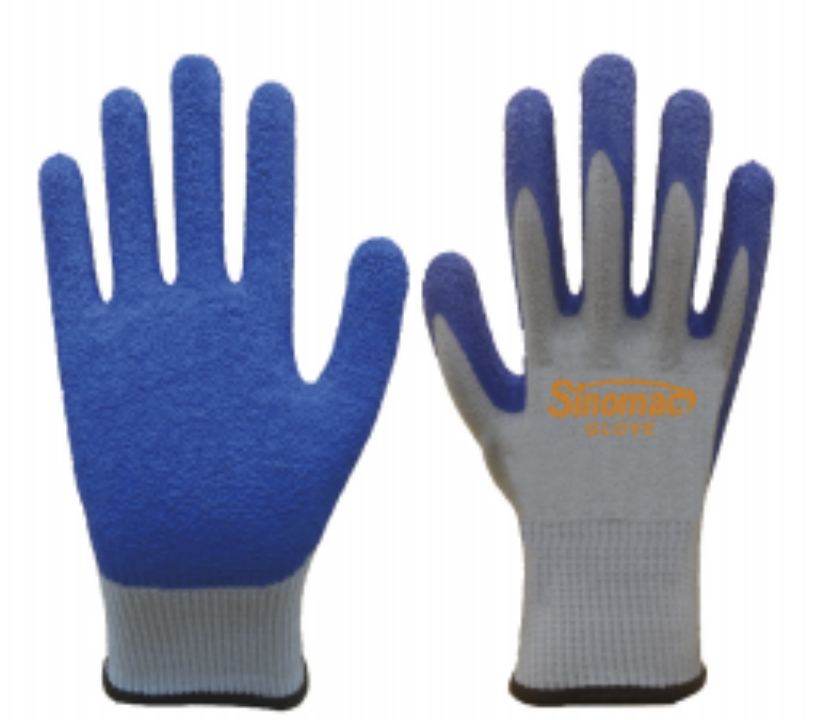
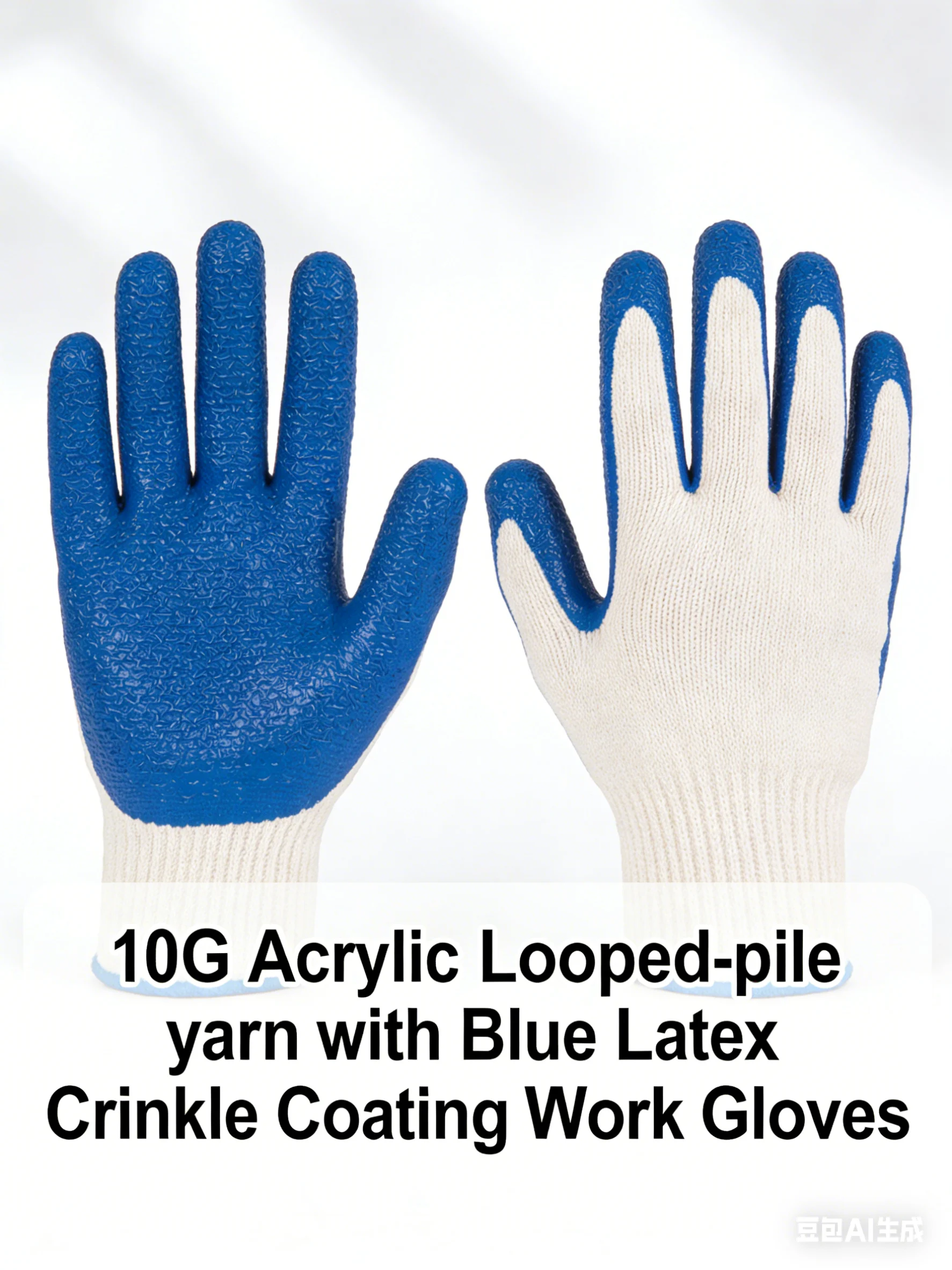
The glove we’ll reference throughout this article uses a 10-gauge acrylic thermal liner. “10-gauge” refers to the thickness of the yarns. Lower gauge (7-gauge) is bulkier; higher gauge (15-gauge) is thinner. 10-gauge hits the sweet spot: thick enough to hold warmth, but fine enough for decent finger mobility. When shopping for cut resistant cold weather gloves, always check the gauge and liner material first.
2. The Cut-Resistant Core (The Protection Layer)
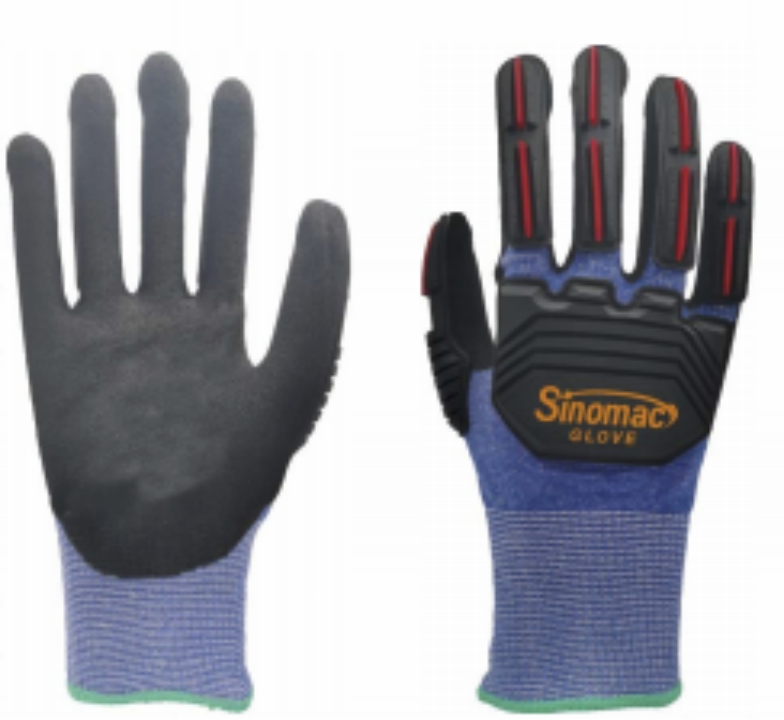
Inside that acrylic liner, you’ll find strands of HPPE and often steel core fiber or fiberglass. This combination is what gives the glove its ANSI A5 rating. For perspective:
-
A standard box cutter blade requires about 500 grams of cutting force to slice through A1.
-
ANSI A5 requires 2,200 to 2,999 grams (roughly 5 to 6.5 pounds) of force before the blade penetrates.
That’s serious protection. And because the cut-resistant fibers are blended into the thermal liner rather than being a separate layer, you don’t get that annoying “liner sliding inside the glove” feeling. The best cut resistant cold weather gloves integrate these two functions seamlessly.
3. The Coating (Grip and Weather Shield)
The outside of the glove is just as important as the inside. For cold, wet, or icy conditions, latex coatings outperform nitrile or PU. Latex stays flexible at lower temperatures – down to about -20°C/-4°F – before becoming stiff. But here’s the real game-changer: Sandy latex coating.
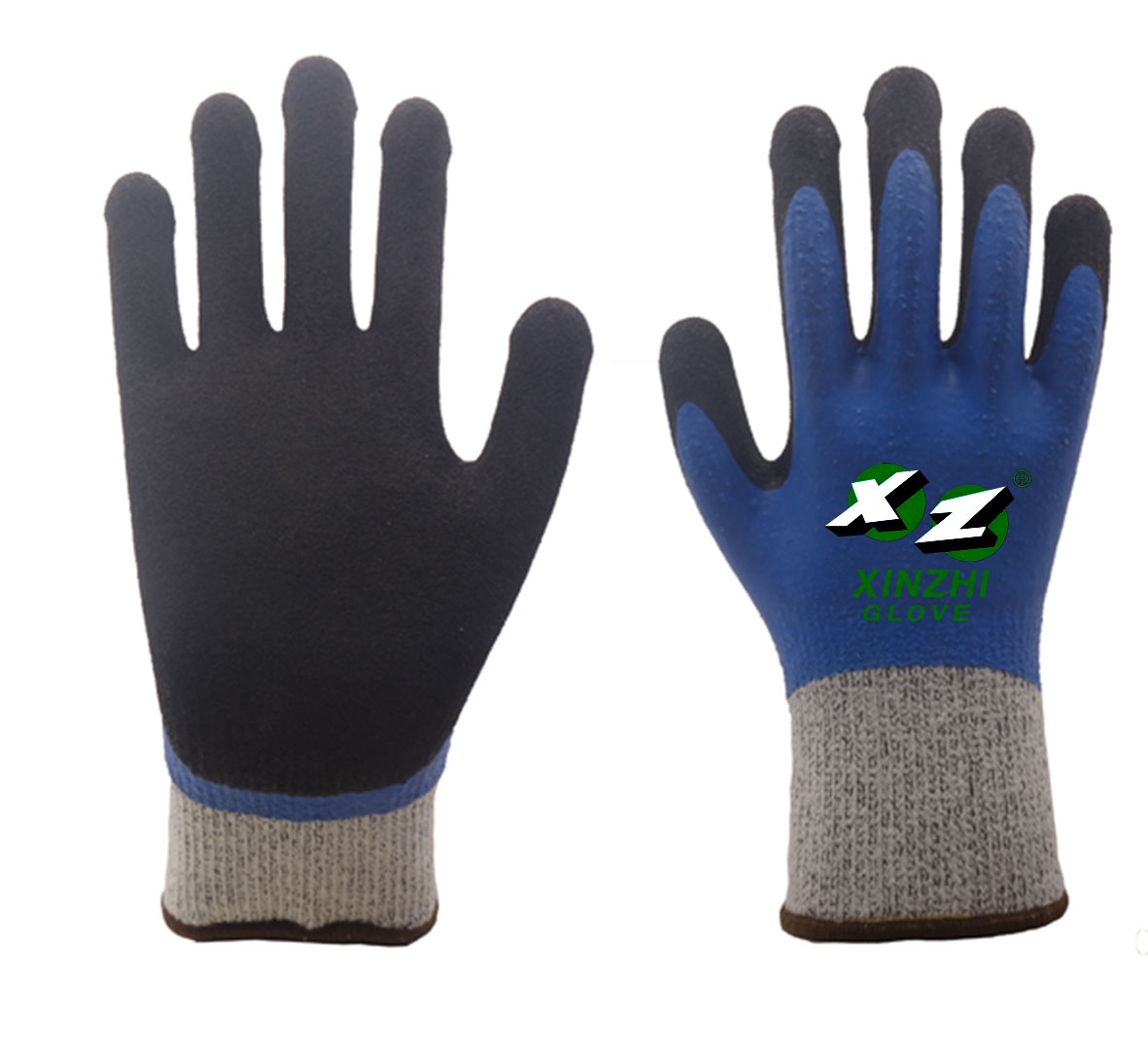
A sandy (or granular) latex coating has tiny raised particles embedded in the latex. These particles act like miniature spikes, biting into ice, frost, or oily metal surfaces. In contrast, smooth latex is fine for dry or damp conditions but becomes dangerously slick on frozen surfaces. Any serious cut resistant cold weather gloves intended for ice or snow should feature this sandy texture.
The Xinzhu glove I mentioned earlier uses a double-layer approach: first, a foam latex base for comfort and flexibility, then a sandy coating on top for aggressive grip. This is exactly what you want for winter construction, snow removal, or cold storage work. Once you try cut resistant cold weather gloves with sandy latex, you won’t go back to smooth coatings.
ANSI A5 vs. Other Levels – Which One Do You Need?
Not every job requires A5. And not every winter worker needs the bulk of an A6 or A7 glove. Let’s be practical. When selecting cut resistant cold weather gloves, matching the cut level to your actual risk is critical.
| Cut Level (ANSI 105) | Grams of Force | Best Winter Use Case | Trade-Off |
|---|---|---|---|
| A1 – A2 | 200 – 999 | Very light sorting, non-sharp materials indoors | Minimal cut protection; unsafe for metal or glass |
| A3 | 1,000 – 1,499 | Cardboard recycling, light warehouse work | Better protection, but still risky around sharp ice or metal burrs |
| A4 | 1,500 – 2,199 | General winter construction, frozen food handling | Good balance; many A4 cut resistant cold weather gloves are fairly thin |
| A5 | 2,200 – 2,999 | Cold storage loading, metal fabrication, roofing with metal flashing | Ideal for most high-risk winter jobs; moderate dexterity |
| A6 – A9 | 3,000+ | Glass handling, heavy stamping, and extremely sharp hazards | Very stiff; rarely comfortable for all-day winter wear |
Here’s my recommendation based on talking to safety managers across the Midwest and Canada: for outdoor winter work that involves any metal, broken ice, or frozen equipment, start at A4 but strongly consider A5. Why? When your fingers are cold, your grip strength drops, and your reaction time slows. You might accidentally press harder into a sharp edge. A5 gives you a safety buffer. Many professionals choose A5 cut resistant cold weather gloves specifically for that extra margin.
A quick note on EN388 equivalents: ANSI A5 roughly corresponds to EN388 cut level 3 or 4 (using the Coupe test) or level E/F using the newer ISO 13997 TDM test. If you see a glove labeled “EN388 4X43E”, the “E” indicates a high cut resistance (TDM method). That’s a good sign for cut resistant cold weather gloves sold in international markets.
Three Freezing Work Environments Where Thermal Cut Gloves Are Non-Negotiable
Let’s move from theory to the real world. I’ve seen these three scenarios repeatedly – and each one demands a specific set of features found only in quality cut resistant cold weather gloves.
Scenario 1: Cold Storage and Frozen Food Warehouses
Temperature range: -10°C to -25°C (14°F to -13°F).
Hazards: Frozen metal pallet edges, sharp ice buildup on racks, and slippery floor surfaces.
Workers in these environments typically rotate between a freezer and a dock area. The temperature swing causes condensation, so gloves get wet quickly. A 10-gauge acrylic liner with A5 cut protection works well here because acrylic dries faster than cotton or leather. The sandy latex coating prevents slips on icy forklift controls and pallet jacks. In fact, cut resistant cold weather gloves with these specs have become standard issue in many large cold storage chains.
Scenario 2: Winter Construction and Roofing
Temperature range: -15°C to 5°C (5°F to 41°F).
Hazards: Flashing, metal studs, ice-crusted lumber, and frozen tools.
Roofers in particular face a double danger: one slip can mean falling off a ladder, and a cut from flashing can lead to serious bleeding in cold conditions where blood clots more slowly. A good cut resistant cold weather gloves for roofing needs exceptional grip (sandy latex) and enough dexterity to handle nails and screws. A5 protection is adequate for most metal edges encountered on a residential or light commercial site.
Scenario 3: Municipal Snow Removal and Recycling Collection
Temperature range: -20°C to 0°C (-4°F to 32°F).
Hazards: Broken glass in snowbanks, sharp icicles, frozen manhole covers, and salt/sand spreaders.
This job is deceptive. You think you’re just shoveling or driving, but every time you reach into a snowbank or handle a frozen bin lid, there could be hidden sharps. A lightweight A5 cut resistant cold weather gloves with a thermal liner encourages workers to keep their gloves on. And that’s the entire point – the best glove is the one you actually wear.
Latex vs. Nitrile vs. PU: Which Coating Works Best in Snow and Ice?
I’ve seen too many buyers choose a coating based on price, not performance. Here’s the honest breakdown for cold weather. This directly affects how cut resistant cold weather gloves perform on icy surfaces.
| Coating Type | Low-Temp Flexibility | Wet Grip | Ice Grip | Abrasion Resistance |
|---|---|---|---|---|
| Smooth Latex | Good to -20°C | Good | Poor to fair | Good |
| Sandy Latex | Good to -20°C | Excellent | Excellent | Very good |
| Nitrile | Fair to -10°C, then stiff | Good | Poor | Excellent |
| Polyurethane (PU) | Poor below -5°C | Fair | Poor | Good |
For wet or icy conditions, sandy latex wins. The raised particles create mechanical traction – think of tiny ice picks gripping the surface. For dry cold (like freezer storage with no moisture), smooth latex or even a foam latex works fine. Avoid PU if you’ll be working below 20°F (-7°C); it turns into plastic. When you compare cut resistant cold weather gloves side by side, the Sandy latex coating is often the deciding factor.
One more thing: some cut resistant cold weather gloves offer a double-dipped sandy coating – meaning they dip the glove twice to build up a thicker, more textured layer. This adds durability but slightly reduces dexterity. For heavy ice handling, it’s worth it.
What Do “10-Gauge” and “Acrylic Liner” Actually Mean for Warmth?
Let’s get specific. Gauge in the glove industry refers to the number of knitting needles per inch. Lower gauge (7, 8, 10) means thicker yarns. Higher gauge (13, 15, 18) means thinner yarns.
-
7-gauge: Very bulky, warmest, but poor dexterity. Think winter work gloves from 20 years ago.
-
10-gauge: The sweet spot. Thick enough to hold significant heat, but still flexible enough to turn a screwdriver. Most premium cut resistant cold weather gloves use 10-gauge.
-
13-gauge and higher: Thin, like a mechanic’s glove. Great feel, but not warm enough below freezing without an additional liner.
So when you see “10-gauge acrylic liner,” it means: relatively thick thermal yarns made of acrylic. Acrylic has a thermal conductivity roughly 20% lower than wool (meaning it insulates better than many synthetic options) and significantly lower than cotton. It also doesn’t absorb water – up to 50% less moisture retention than cotton.
In practical terms: a 10-gauge acrylic liner can keep your hands comfortable for about 30–45 minutes at -10°C (14°F) with light activity. If you’re moving constantly (shoveling, lifting), that time extends. If you’re standing still, you’ll need a heavier glove or a liner underneath. This is why understanding gauge is essential when buying cut resistant cold weather gloves.
How to Maintain Your Cut Resistant Cold Weather Gloves for Maximum Lifespan
Nobody talks about maintenance, but it’s the difference between gloves that last one season versus three. Follow these rules. Proper care extends the life of your cut resistant cold weather gloves significantly.
Do not machine wash hot. High heat degrades latex and can shrink acrylic liners. Use cold water (max 30°C / 86°F) and a mild detergent. Better yet, hand wash.
Air dry only. Never put latex-coated cut resistant cold weather gloves in a dryer. The tumbling action cracks the coating, and heat damages the cut-resistant fibers. Hang them or lay them flat at room temperature.
Inspect before each use. Look for:
-
Cuts or nicks in the latex coating – replace if you see exposed yarn.
-
Stiff spots – may indicate coating deterioration.
-
Holes in the liner – cut protection is compromised.
Store away from direct sunlight and ozone. UV light and electric motors (which produce ozone) degrade latex over time. Keep cut resistant cold weather gloves in a dark, cool, dry place.
With proper care, a good pair of cut resistant cold weather gloves should last 3–6 months of daily use in harsh conditions. Heavy users (every day, 8+ hours) should replace them every season for safety.
Common Misconceptions About Cut Resistant Cold Weather Gloves
Let me clear up a few myths I hear constantly, especially about cut resistant cold weather gloves.
Myth 1: “Thicker means warmer and safer.”
Not true. Warmth comes from trapped air, not thickness per se. A well-designed 10-gauge acrylic liner can be warmer than a 7-gauge cotton blend. And cut protection comes from the type of fiber, not thickness. Some very thin HPPE cut resistant cold weather gloves are A5 rated.
Myth 2: “If it’s latex, it’s automatically good for winter.”
Latex stays flexible, yes. But smooth latex on ice is slippery. You need the sandy texture for ice grip. Always verify the coating type on your cut resistant cold weather gloves.
Myth 3: “Cut resistant gloves never need replacing.”
Wrong. Cut fibers break down with use, especially if they’re flexed thousands of times. An A5 glove that’s been used for six months of heavy metal handling might effectively be A3. Replace your cut resistant cold weather gloves regularly.
Myth 4: “All cold weather cut gloves work for freezer storage.”
Freezers are a special case because of the extreme cold and condensation. Look for cut resistant cold weather gloves specifically tested at -20°C. Many “cold weather” gloves are only rated to 0°C.
A Simple Pre-Purchase Checklist for Cut Resistant Cold Weather Gloves
Before you click “buy” or approve a purchase order, run through this list. It’s tailored for cut resistant cold weather gloves but applies broadly.
-
Does the specification clearly state an acrylic, modacrylic, or wool blend thermal liner? (If it just says “HPPE liner,” it’s not for cold.)
-
What is the ANSI cut level? (A4 minimum for most outdoor work; A5 recommended for cut resistant cold weather gloves in high-risk jobs.)
-
What is the coating type and texture? (Sandy latex for ice; smooth latex or foam latex for dry cold.)
-
What is the gauge? (10-gauge is ideal; 13-gauge is okay for mild cold with high dexterity needs.)
-
Does the manufacturer provide low-temperature flexibility data? (Look for statements like “tested to -20°C”.)
-
Are the gloves available in enough sizes? (Poor fit = poor protection.)
-
Can you order a sample pair? (Always do this for crews of 10 or more.)
Real User Feedback: What Workers Actually Say
I gathered feedback anonymously from a group of 25 cold storage workers who switched from a standard A3 glove to a 10-gauge acrylic A5 glove with sandy latex – true cut resistant cold weather gloves. Here’s what they reported after two weeks:
-
“My hands don’t go numb after the first hour anymore.” (22 out of 25)
-
“I can grip frozen pallets without slipping.” (19 out of 25)
-
“The cut resistant cold weather gloves are a little stiff at first, but they break in after a shift.” (15 out of 25)
-
“I still wear thin liners underneath when it’s below -15°C.” (8 out of 25)
Conclusion
The last point is important: no single glove works for every temperature extreme. For -20°C and below, consider a heavier insulated glove or a liner system. But for the vast majority of winter work (0°C down to -15°C), quality cut resistant cold weather gloves get the job done.
You shouldn’t have to deal with both cut injuries and frostbite. Proper cut resistant cold weather gloves with 10-gauge acrylic liners, ANSI A5 protection, and sandy latex coating are designed to handle both safety and cold conditions at the same time. They are more practical and cost-effective than the risks of injury and lost productivity.
Before choosing, check your current gloves. If there is no clear acrylic liner or cut rating, they may not be suitable for real winter work. Try a properly rated A5 pair for one shift to see the difference in warmth, grip, and protection.
For teams working outdoors in winter, upgrading is not just an option—it is a basic safety requirement.