



Introduction
Hand injuries are among the most common workplace accidents worldwide. According to the U.S. Bureau of Labor Statistics, over 100,000 hand injuries occur annually in private industries, and nearly 80% happen when workers are not wearing proper hand protection. This highlights a simple but critical fact: inadequate or missing hand protection significantly increases workplace risk.
A highly effective solution is the use of 18-gauge cut resistant gloves. These gloves are designed to combine strong cut protection with excellent flexibility and comfort for daily industrial use. Studies show that appropriate protective gloves can reduce hand injury risk by around 60%, making them essential in modern workplace safety systems.
The global cut resistant gloves market continues to grow, valued at approximately $1.95 billion in 2025 and projected to reach $3.03 billion by 2032, with a CAGR of 6.48%. Growth is driven by rising safety standards across construction, metalworking, glass handling, automotive, and logistics industries.
Within this market, 18-gauge cut resistant gloves are increasingly preferred due to their lightweight structure and high protection level. Unlike heavier gloves, 18-gauge designs provide better dexterity, breathability, and comfort, making them suitable for tasks requiring both precision and safety.
This guide explains what 18-gauge cut resistant gloves are, how cut resistance levels are defined under ANSI/EN388 standards, and how to choose the right coating and glove type for different industrial applications.
Understanding the Gauge: What Does “18-Gauge” Mean?
Before diving into cut resistance levels, let us clarify the most fundamental feature of 18-gauge cut resistant gloves: the gauge number itself.
Glove Gauge Explained
Gauge refers to the knitting density of a seamless glove. In the protective glove industry, gauge is measured by counting the number of needles per inch on the knitting machine. A higher gauge number means more needles per inch, which produces a finer, tighter knit.
-
7-gauge to 10-gauge: Thick, heavy, coarse-knit gloves. These offer good durability but very poor dexterity. You will not be able to handle small parts or perform precision tasks.
-
13-gauge: The industry standard for many years. Balanced protection and dexterity, suitable for general industrial work.
-
15-gauge: Finer knit, better fit and feel than 13-gauge. Good for tasks requiring moderate dexterity.
-
18-gauge: Ultra-fine knitting that creates a glove with exceptional flexibility and a close, second-skin fit. 18-gauge cut resistant gloves feel more like a performance athletic glove than a bulky safety glove.
-
21-gauge to 24-gauge: Even finer knitting for high-dexterity applications, though often with lower cut protection levels.
Why 18-Gauge Matters for Modern Workplaces
18-gauge cut resistant gloves represent the “sweet spot” where protection meets performance. According to SHOWA Gloves, their 18-gauge system is designed for maximum cut protection, superior dexterity, and unbeatable industrial life, describing it as “the definition of optimal”.
The high gauge of 18, combined with advanced fibers like HPPE (High-Performance Polyethylene), polyester, steel fiber, and spandex, provides exceptional comfort while offering maximum cut protection. This means workers can wear 18-gauge cut resistant gloves for extended shifts without experiencing the hand fatigue that comes with bulkier, lower-gauge alternatives.
The Seamless Knit Advantage
18-gauge cut resistant gloves are constructed using seamless knitting technology, which eliminates the interior seams found in traditional stitched gloves. Seamless construction offers several critical benefits:
-
No pressure points or chafing from internal seams
-
Superior breathability through the open knit structure
-
Enhanced flexibility that moves naturally with the hand
-
Reduced hand fatigue during prolonged use
-
Better fit across the entire hand profile
For workers who wear gloves for eight to ten hours daily, the comfort difference between a seamless 18-gauge cut resistant glove and a traditional stitched glove is immediately noticeable and significant.
ANSI Cut Resistance Levels: From A1 to A9
Understanding cut protection levels is essential for selecting the right 18-gauge cut resistant gloves. The ANSI/ISEA 105 standard provides the most widely recognized classification system for cut-resistant gloves in North America.
The Nine-Level Scale
The ANSI cut level scale ranges from A1 (least resistant) to A9 (most resistant). The levels are determined by the amount of cutting force (measured in grams) a glove can withstand before blade penetration occurs.
| ANSI Cut Level | Force Required (grams) | Typical Applications |
|---|---|---|
| A1 | 200–499 | Light handling, paper cuts, minor abrasions |
| A2 | 500–999 | Warehouse work, light assembly |
| A3 | 1,000–1,499 | HVAC, light construction, general handling |
| A4 | 1,500–2,199 | Glass handling, roofing, sheet metal |
| A5 | 2,200–2,999 | Heavy glass, metal stamping, recycling |
| A6 | 3,000–3,999 | Metal processing, construction, and automotive repair |
| A7 | 4,000–4,999 | Heavy industrial, sharp metal fabrication |
| A8 | 5,000–5,999 | Extreme cut hazards, razor-sharp objects |
| A9 | 6,000+ | Armored protection for the highest risk environments |
Source: ANSI/ISEA 105 cut level standards
18-gauge cut resistant gloves with an ANSI A6 rating can withstand between 3,000 and 3,999 grams of cutting force—enough to protect against the sharp edges encountered in metal processing, construction, glass handling, and automotive repair. ANSI cut levels A4 through A6 are classified as “Medium to High Protection”.
EN388 Equivalent Ratings
For international applications, the European EN388 standard uses a different cut level designation. An 18-gauge glove with ANSI A6 typically corresponds to EN388 Cut Level F (the highest level), indicating the glove has passed the more rigorous ISO 13997 cut test (TDM test) with a force exceeding 30 Newtons.
How the Test Works
Understanding how cut resistance is tested helps interpret these ratings. The ANSI cut test uses a straight blade drawn across the glove material under increasing weight loads until the blade cuts through. The weight at which penetration occurs determines the cut level. 18-gauge cut resistant gloves with an A6 rating have been tested to withstand over 3 kilograms of cutting force—significantly more than the weight of most sharp tools encountered in daily operations.
Core Components of 18-Gauge Cut Resistant Gloves
18-gauge cut resistant gloves are engineered systems consisting of two primary components: the liner (which provides cut resistance) and the coating (which provides grip and durability). Understanding both is key to selecting the right glove for your application.
Liner Materials – The Cut Resistance Foundation
The cut resistance of 18-gauge cut resistant gloves comes from the fibers used in the seamless knitted liner. Common materials include:
-
HPPE (High-Performance Polyethylene): An ultra-strong, lightweight synthetic fiber that provides exceptional cut resistance without bulk. HPPE is the most common high-performance fiber used in premium 18-gauge cut resistant gloves. The material has a low carbon footprint and requires less material to achieve high cut protection.
-
Steel Fiber: Some 18-gauge cut resistant gloves incorporate fine steel wire into the knit to achieve very high cut levels (A6 and above). Steel fiber adds structural integrity but may slightly reduce flexibility compared to all-HPPE designs.
-
Polyester: Provides durability, dimensional stability, and abrasion resistance. Often blended with HPPE to improve overall glove performance.
-
Spandex: Added to provide elasticity, ensuring the glove conforms closely to the hand for maximum dexterity and comfort.
-
Nylon: Enhances softness and comfort against the skin, reducing irritation during extended wear.
A typical 18-gauge cut resistant glove with an A6 rating uses a blended liner of HPPE, polyester, steel fiber, and spandex—each component contributing to the glove’s overall performance profile.
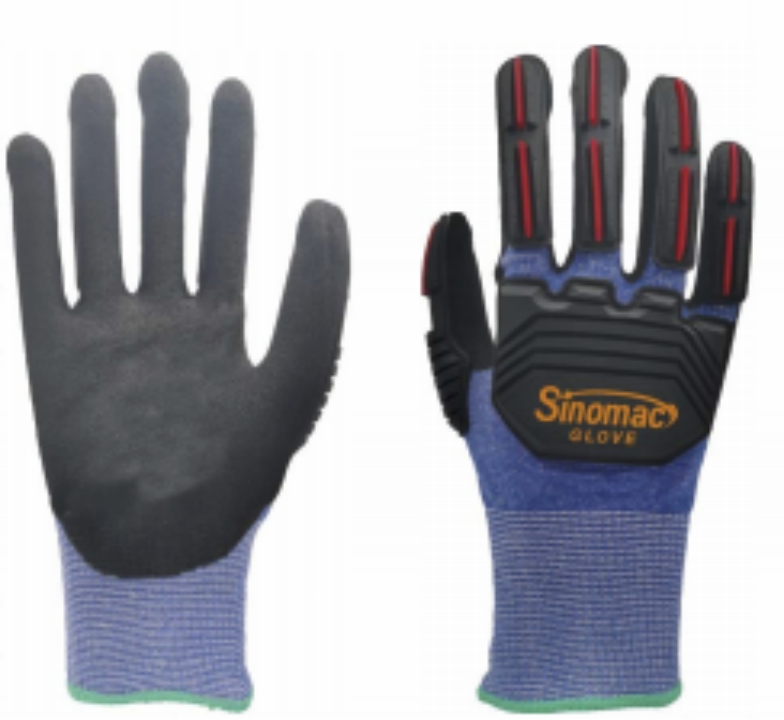
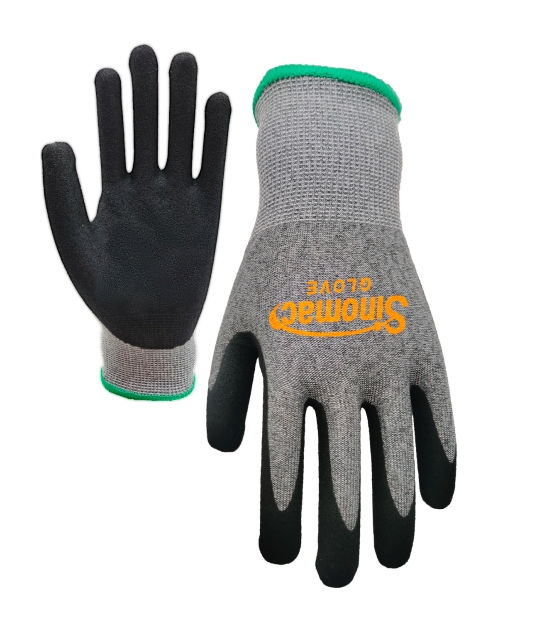
Sandy Nitrile Coating – The Gold Standard for Grip
The coating on 18-gauge cut resistant gloves determines how well the glove performs in specific working conditions. Sandy nitrile coating has emerged as a preferred choice for demanding industrial applications.
Sandy nitrile involves a specialized secondary dipping process that creates a micro-textured, porous surface. This texture functions almost like a suction-cup effect, displacing heavy lubricants and liquids to maintain direct contact with the gripped surface. Key characteristics include:
-
High abrasion resistance: Sandy nitrile is known for its outstanding durability, outlasting many other coating types.
-
Excellent grip across conditions: Sandy nitrile coating provides superior grip in dry, wet, and light oil environments. It is even suitable for contact with heavy oils and liquids.
-
Elastic and form-fitting: More elastic and form-fitting compared to other nitrile coatings, Sandy nitrile conforms to hand movements without stiffness.
-
Enhanced durability: The sand-textured surface provides excellent wear resistance, extending glove life even in high-friction applications.
18-gauge cut resistant gloves with sandy nitrile coating typically feature palm and back coating coverage, providing protection where it is needed most while leaving the back of the hand breathable.
Breathable and Lightweight Design
One of the biggest complaints workers have about safety gloves is that they become hot and sweaty. 18-gauge cut resistant gloves solve this problem through their lightweight, breathable construction. The 18-gauge seamless knit creates thousands of tiny ventilation channels that allow heat and moisture to escape, keeping hands cool and comfortable even during long shifts. The close-fitting design also allows for high dexterity and precise operation, making these gloves suitable for tasks that require fine motor control.
Coating Comparison – Sandy Nitrile vs. Alternatives
Not all glove coatings are created equal. The choice of coating directly affects grip performance, durability, and suitability for different working conditions. Here is how Sandy Nitrile compares to other common coatings:
| Coating Type | Best For | Grip Performance | Durability | Flexibility |
|---|---|---|---|---|
| Sandy Nitrile | Heavy-duty industrial, metal processing, glass handling, oily/wet conditions | Excellent in dry, wet, and oily environments | Outstanding abrasion resistance | Good—more elastic than flat nitrile |
| Foam Nitrile | Oily applications, light assembly | Excellent in oily, good in dry | Good—but can saturate in heavy oil | Very good—soft and flexible |
| Polyurethane (PU) | Precision handling, dry environments | Good in dry only | Moderate—less abrasion resistant | Excellent—very thin and flexible |
| Smooth Nitrile | Chemical resistance, general purpose | Fair in dry, poor in wet/oily | Good | Moderate |
| Latex | Wet environments, general handling | Excellent in wet | Good | Good—but may cause allergies |
Sandy nitrile stands out as the most versatile option for demanding industrial environments. While foam nitrile may offer a softer feel, Sandy nitrile’s superior abrasion resistance makes it the better choice for high-wear applications. Foam nitrile can become saturated in heavy oil or liquid applications, whereas sandy nitrile is specifically designed to perform in these challenging conditions.
18-gauge cut resistant gloves with sandy nitrile coating are ideal for workers who need a reliable grip across varying conditions—from dry assembly lines to wet processing areas to oily machine shops.
Key Applications of 18-Gauge Cut Resistant Gloves
18-gauge cut resistant gloves with ANSI A6 protection and sandy nitrile coating are specified for a wide range of high-risk industries and tasks.
Metal Processing and Handling
Metal fabrication, stamping, and handling involve sharp edges, burrs, and thin-gauge sheet metal that can cause serious lacerations. 18-gauge cut resistant gloves protect workers’ hands while the sandy nitrile coating ensures a secure grip on smooth metal surfaces, even when lubricants are present.
Glass Handling and Manufacturing
Glass handling requires both cut protection (from sharp edges) and grip (to prevent dropping heavy glass sheets). 18-gauge cut resistant gloves provide A6-level protection against glass cuts, while the sandy nitrile coating maintains grip even on wet glass surfaces.
Construction and Building
Construction sites present numerous cut hazards, including rebar, metal studs, roofing materials, and utility knives. 18-gauge cut resistant gloves offer the durability and protection needed for daily construction work without sacrificing the dexterity required for tool handling and fastening.
Heavy-Duty Industrial Work
General heavy industrial environments—including automotive manufacturing, recycling facilities, and heavy equipment assembly—require gloves that can withstand sharp edges, abrasive surfaces, and extended wear. 18-gauge cut resistant gloves deliver the necessary protection while keeping workers comfortable through full shifts.
Automotive Repair and Maintenance
Automotive technicians frequently encounter sharp metal edges, broken glass, and cutting tools. 18-gauge cut resistant gloves provide the cut protection needed, while the sandy nitrile coating offers excellent grip on oily engine components and tools.
Logistics and Warehousing
Warehouse operations involve handling sharp cardboard edges, metal strapping, and various packaged goods with potentially hazardous edges. 18-gauge cut resistant gloves protect workers during sorting, packing, and shipping operations while maintaining the dexterity needed for scanning and labeling tasks.
Real-World Protection – The Impact of Proper Glove Use
The statistics speak for themselves. The use of cut-resistant gloves reduces knife cuts in food processing by approximately 60%. Using puncture-resistant gloves decreases the risk of hand injuries from sharp objects by 70%. Yet nearly 80% of hand injuries occur when workers are not wearing gloves at all.
What these numbers reveal is not a failure of glove technology but a failure of glove adoption. Workers often resist wearing gloves that are uncomfortable, bulky, or hot. 18-gauge cut resistant gloves directly address this resistance by offering a glove that workers actually want to wear: lightweight, breathable, flexible, and comfortable enough for all-day use.
*“I used to avoid gloves because they made my hands sweat and I couldn’t feel what I was doing,” reports Mike, a metal fabricator with 15 years of experience. “But these 18-gauge gloves are different. They fit like a second skin. I can feel small parts and handle tools normally. Now I wear them all day without even thinking about it.”*
How to Choose the Right 18-Gauge Cut Resistant Gloves
Selecting the correct 18-gauge cut resistant gloves for your application involves evaluating several key factors:
Assess Your Cut Hazard Level
Identify the sharp objects and materials your workers handle regularly. For general metal processing, glass handling, and construction work, ANSI A6 provides an excellent balance of protection and dexterity. For lower-risk applications like light assembly, A3 or A4 may be sufficient. For extreme cut hazards involving razor-sharp objects, consider A7 or higher.
Consider Your Working Conditions
-
Dry environments: Sandy nitrile coating performs excellently.
-
Wet conditions: Sandy nitrile maintains grip on wet surfaces.
-
Oily conditions: Sandy nitrile is the gold standard for heavy oil applications, creating a suction-cup effect that displaces lubricants.
-
Hot environments: The breathable 18-gauge knit keeps hands cooler than lower-gauge alternatives.
Check Safety Certifications
Look for 18-gauge cut resistant gloves that carry recognized safety certifications. ANSI/ISEA 105 certification for cut resistance is essential for North American applications. OEKO-TEX certification indicates the materials are safe for skin contact. OSHA compliance is also critical, as 29 CFR 1910.138 requires employers to select and require appropriate hand protection when employees’ hands are exposed to severe cut or laceration hazards.
Evaluate Fit and Sizing
18-gauge cut resistant gloves are available in sizes ranging from XS to 2XL. Proper fit is essential for both protection and comfort. A glove that is too large will bunch up and interfere with dexterity; a glove that is too small will cause discomfort and may restrict circulation. The close-fitting design of 18-gauge gloves ensures a precise fit when sized correctly.
Test Before Committing
Request samples of 18-gauge cut resistant gloves before placing a large order. Have workers wear them for a full shift to assess comfort, dexterity, and grip performance in actual working conditions. The best glove is one that workers will actually wear consistently.
FAQ
Q1: What does “18-gauge” mean in cut resistant gloves?
Gauge refers to the knitting density—the number of needles per inch on the knitting machine. 18-gauge cut resistant gloves are knitted with 18 needles per inch, producing a fine, tight knit that delivers exceptional flexibility, a close fit, and superior dexterity compared to lower-gauge gloves.
Q2: Is ANSI A6 cut resistance enough for metal handling?
Yes, for most metal processing and handling applications. ANSI A6 gloves withstand 3,000–3,999 grams of cutting force, sufficient for handling stamped metal parts, sheet metal edges, and most fabricated metal components. For extremely sharp edges or high-speed operations, consider A7 or higher.
Q3: Are 18-gauge cut resistant gloves machine washable?
Most 18-gauge cut resistant gloves can be machine-washed in cold water and air-dried. Always check the manufacturer’s care instructions. Proper washing removes contaminants and extends glove life. Avoid high heat, which can damage HPPE fibers and reduce cut resistance.
Q4: How do I know if my gloves are OSHA compliant?
18-gauge cut resistant gloves help meet OSHA 29 CFR 1910.138 requirements when properly selected for the specific cut hazard. OSHA mandates that employers evaluate hazards and select appropriate hand protection. An ANSI-certified glove matched to the job’s cut risk level demonstrates compliance efforts.
Q5: How long do 18-gauge cut resistant gloves typically last?
Service life varies by application and frequency of use. In heavy industrial environments with daily wear, quality 18-gauge cut resistant gloves typically last 2–4 weeks. Rotating multiple pairs and washing regularly can extend service life. Replace gloves immediately if cut-through occurs or if the coating shows significant wear.
Conclusion: Protection Without Compromise
18-gauge cut resistant gloves represent a significant advancement in workplace hand protection. They solve the historic trade-off between safety and usability, delivering ANSI A6 cut protection in a glove that is lightweight, breathable, and comfortable enough for all-day wear.
The numbers are compelling: over 100,000 hand injuries occur annually in the U.S. private industry, and nearly 80% happen when workers are not wearing gloves. Proper glove selection and consistent use can reduce hand injury risk by approximately 60%. The global cut resistant gloves market is expanding rapidly, projected to grow from $1.95 billion in 2025 to $3.03 billion by 2032—a clear indication that industries are recognizing the value of advanced hand protection.
18-gauge cut resistant gloves with an ANSI A6 rating and sandy nitrile coating deliver the protection, grip, and comfort that modern workplaces demand. Whether you are managing a metal fabrication shop, a glass manufacturing facility, a construction site, or an automotive repair garage, these gloves provide the safety your workers need and the comfort they will appreciate.
Do not wait for an injury to occur before upgrading your hand protection. The cost of a single hand laceration—in medical expenses, lost productivity, and worker suffering—far exceeds the investment in quality 18-gauge cut resistant gloves.
Please feel free to contact us anytime if you have any questions.