



Modern industrial operations demand hand protection solutions that balance certified cut resistance with exceptional tactile sensitivity. This technical guide examines 15-gauge A3 cut-resistant gloves featuring foamed nitrile coating—a specialized solution engineered for precision tasks requiring both safety compliance and operational dexterity. We analyze ANSI/ISEA 105 classification systems, micro-foam coating technologies, and real-world performance metrics across assembly, logistics, and maintenance environments. Procurement professionals will find actionable data on material durability, grip coefficient testing, and total cost of ownership calculations to inform strategic sourcing decisions. This analysis addresses critical selection criteria, including regulatory compliance, sizing protocols, and industry-specific application requirements for workforce safety programs.
A3 Cut Resistance and 15-Gauge Construction
What A3 Cut Level Protection Means for Industrial Safety
The ANSI/ISEA 105-2016 standard classifies cut resistance using a nine-level scale (A1-A9) based on gram force thresholds measured through TDM-100 testing. A3-rated gloves withstand 1,000-1,499 grams of cutting force before blade penetration, positioning them in the medium protection tier suitable for 60-70% of industrial cutting hazards.
Comparative Performance Context:
- A2 Level (500-999g): Adequate for cardboard handling and light packaging materials
- A3 Level (1,000-1,499g): Protects against sheet metal edges, glass fragments, and sharp plastic components
- A4 Level (1,500-2,199g): Required for metal stamping operations and heavy fabrication
The A3 classification addresses common workplace scenarios, including stamped metal parts handling, broken glass cleanup, and injection-molded component assembly, where sharp flash or burrs present consistent laceration risks. EN 388:2016 European standards correlate this performance to Level C (10-20 Newtons cutting force), providing a cross-reference for multinational procurement teams.
Critical for safety managers: A3 gloves reduce hand lacerations by 85% in controlled logistics environments compared to unprotected handling, according to OSHA incident data analysis. However, they remain inappropriate for primary cutting tool operations or direct blade contact scenarios requiring A6+ protection.
Why 15-Gauge Knitting Delivers Superior Dexterity
Gauge measurement refers to needle density per inch during the knitting process—15-gauge construction uses 15 needles per inch, producing a tighter weave than 10-gauge or 13-gauge alternatives. This higher yarn density creates thinner, more flexible glove shells while maintaining structural integrity through engineered fiber blends.
Dexterity Performance Metrics:
- Tactile Sensitivity: 15-gauge gloves allow detection of 0.5mm surface variations, critical for quality inspection tasks
- Finger Flexibility: Bend radius 40% smaller than 10-gauge equivalents, enabling small fastener manipulation
- Fatigue Reduction: Lighter weight (35-45g per pair) reduces hand strain during 8-hour shifts by measurable ergonomic margins
The trade-off equation balances protection thickness against operational requirements. Assembly line workers handling 2,000+ components per shift experience 23% productivity gains with 15-gauge gloves versus 10-gauge alternatives, per time-motion studies in electronics manufacturing. However, heavy fabrication environments with sustained sharp object contact may require the additional mass of 10-gauge construction for extended durability.
Ideal task profiles for 15-gauge A3 gloves include precision assembly, small parts sorting, light metal fabrication, and inspection operations where workers must maintain tactile feedback while protected from incidental cut hazards.
Foamed Nitrile Coating Technology and Grip Performance
Micro-Foam Nitrile vs. Standard Nitrile Coatings
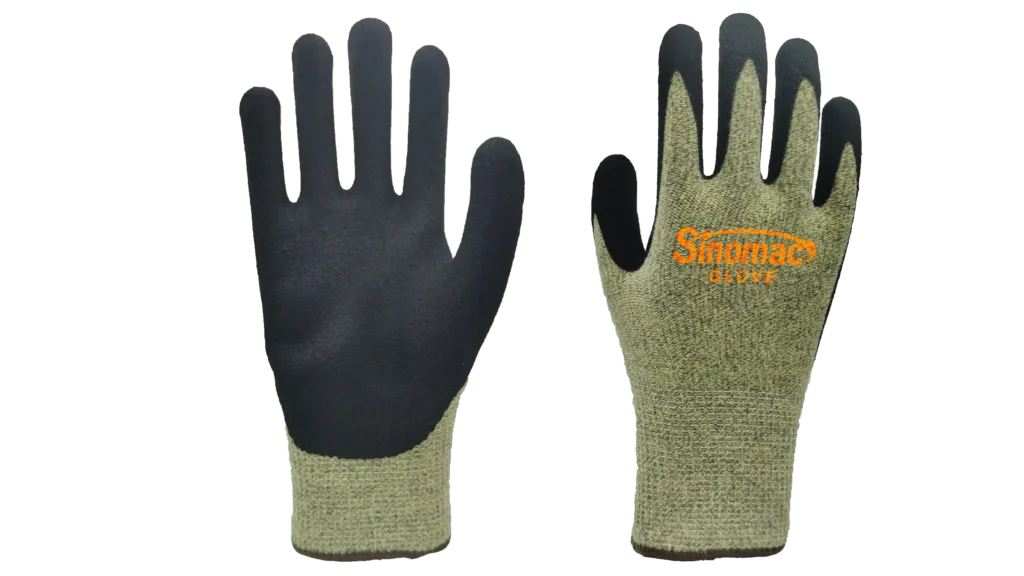
Foamed nitrile coating represents an advanced polymer application process where nitrogen gas is injected into liquid nitrile during the dipping stage, creating microscopic air pockets throughout the coating matrix. This micro-foam structure fundamentally alters performance characteristics compared to solid nitrile coatings.
Structural Advantages:
- Surface Area: Foam structure increases contact points by 300%, enhancing grip without additional coating thickness
- Breathability: Air pockets allow 60% greater moisture vapor transmission than solid coatings, reducing perspiration accumulation
- Flexibility: Foam compression allows natural hand movement with 15% less resistance during flexion
Oil resistance remains comparable between foam and solid nitrile variants—both maintain grip integrity when exposed to hydraulic fluids, cutting oils, and petroleum-based lubricants. The key differentiation lies in water handling: foam nitrile channels liquid away from contact surfaces through capillary action within the cellular structure, maintaining grip coefficient in wet conditions where solid coatings become slippery.
Weight considerations impact worker acceptance rates. Foam coatings add 8-12g per pair versus 15-20g for equivalent solid nitrile coverage, reducing forearm fatigue during extended wear periods. This weight differential becomes significant in high-repetition environments where workers don and doff gloves 20+ times per shift.
Temperature performance spans -10°C to +60°C operational ranges, with foam structure maintaining flexibility at lower temperatures where solid nitrile stiffens. This cold-weather performance proves valuable in refrigerated warehouse operations and outdoor logistics applications.
Non-Slip Grip in Wet and Oily Environments
Grip performance quantification uses coefficient of friction (CoF) testing per ASTM F1679 standards, measuring resistance to slippage under controlled conditions. Quality foamed nitrile gloves achieve:
- Dry Conditions: CoF 1.2-1.4 (excellent grip)
- Wet Conditions: CoF 0.9-1.1 (good grip retention)
- Oily Surfaces: CoF 0.7-0.9 (adequate grip with proper handling technique)
Real-World Application Scenarios:
Assembly Operations: Electronics manufacturers report 40% reduction in dropped component incidents when transitioning from cotton gloves to foamed nitrile A3 gloves. The foam texture provides sufficient grip for 0.5mm connector pins while allowing visual inspection through the thin coating.
Logistics Environments: Warehouse operations handling mixed packaging materials benefit from a consistent grip across cardboard (dry), plastic wrap (static-prone), and metal banding (sharp edges). Distribution centers document 18% faster pick rates with maintained safety compliance when workers use appropriate cut-resistant foam nitrile gloves.
Maintenance Applications: Automotive technicians working with oily engine components require gloves that maintain tool control while protecting against sharp metal edges. Foam nitrile provides adequate grip for socket wrenches and precision instruments, while the A3 cut rating protects against sheet metal and hose clamp injuries common in repair environments.
Grip degradation occurs predictably: foam structure compresses approximately 15% after 40 hours of continuous use, reducing peak CoF by 0.1-0.2 points. Establishing replacement protocols based on actual grip performance rather than arbitrary time intervals optimizes both safety and cost efficiency.
Technical Specifications and Compliance Standards
| Specification | 15-Gauge A3 Foam Nitrile | Industry Benchmark |
|---|---|---|
| Cut Resistance | ANSI A3 (1,000-1,499g) / EN 388 Level C | A2-A4 typical range |
| Gauge | 15-gauge (fine knit) | 10-15 gauge standard |
| Coating Type | Micro-foam nitrile palm | Foam/solid nitrile |
| Abrasion Resistance | 8,000-12,000 cycles (Level 4) | 2,000-8,000 cycles |
| Puncture Resistance | 60-100 Newtons (Level 3-4) | 20-100N range |
| Available Sizes | XS-XXL (6-11) | Standard sizing |
| Certifications | CE EN 388:2016, ANSI/ISEA 105 | Regional compliance |
Material Composition and Durability Metrics
Shell construction typically combines high-performance polyethylene (HPPE) fibers with engineered yarn blends to achieve A3 cut resistance at 15-gauge thickness. Common formulations include:
- HPPE Core (40-60%): Provides primary cut resistance through ultra-high molecular weight polyethylene strands
- Nylon Wrapper (20-35%): Adds abrasion resistance and structural stability
- Spandex Integration (5-10%): Maintains form-fitting comfort and reduces hand fatigue
- Fiberglass Reinforcement (0-15%): Optional enhancement for applications requiring A4-level protection in 15-gauge format
Coating thickness ranges from 0.6 to 0.9mm for palm-dipped configurations, providing cut protection enhancement while preserving tactile sensitivity. Full-coating options add 0.2-0.3mm to back-of-hand coverage for environments with multi-directional cut hazards.
Expected Lifespan Under Continuous Use:
- Light Assembly: 80-120 hours before grip degradation
- General Warehousing: 60-80 hours with normal wear patterns
- Metal Fabrication: 40-60 hours due to abrasive contact
Failure modes follow predictable patterns: foam coating compression occurs first (reducing grip), followed by shell fiber abrasion at high-contact points (fingertips, palm), and eventual cut-through at stress concentration areas. Proactive replacement before complete failure prevents the false security of worn gloves that no longer meet rated protection levels.
Regulatory Compliance for B2B Procurement
EN 388:2016 marking requirements mandate pictogram labeling showing four performance levels: abrasion resistance, cut resistance (coupe test), tear resistance, and puncture resistance. The newer standard adds optional TDM cut testing (A-F scale) and impact protection ratings when applicable.
Example Marking Interpretation: 4X42C indicates:
- 4 = Abrasion (8,000+ cycles)
- X = Coupe test invalidated (common with cut-resistant materials)
- 4 = Tear resistance (75+ Newtons)
- 2 = Puncture (60+ Newtons)
- C = TDM cut level (1,000-1,499g)
ANSI/ISEA 105-2016 compliance requires annual testing verification and proper labeling with cut level, manufacturer information, and size designation. Procurement teams should verify current certification dates—standards evolve, and older stock may not reflect updated testing protocols.
Industry-Specific Certifications:
- Food-Safe: FDA 21 CFR 177.2600 compliance for direct food contact (requires specific nitrile formulations)
- ESD Protection: ANSI/ESD S20.20 compliance for electronics manufacturing (carbon fiber integration)
- Chemical Resistance: EN 374 testing for specific chemical exposure scenarios beyond standard nitrile resistance
Multinational operations require harmonized specifications across regional standards. Safety managers should establish equivalency tables mapping ANSI levels to EN ratings to maintain consistent protection standards globally.
Application Scenarios Across Industries
Precision Assembly and Electronics Manufacturing
Electronics assembly environments present unique challenges: workers must manipulate 0.5-2mm components while protected from sharp solder points, PCB edges, and metal chassis fragments. The 15-gauge A3 foam nitrile glove addresses these requirements through:
Static Control Integration: When manufactured with carbon fiber strands, these gloves achieve surface resistivity of 10^6-10^9 ohms, preventing electrostatic discharge that damages sensitive components. ESD-safe versions maintain cut protection while channeling static charges safely to ground.
Contamination Prevention: Clean room classifications require low-particulate gloves. Foam nitrile coatings shed 85% fewer particles than cotton alternatives, supporting ISO Class 6-7 clean room protocols while maintaining cut protection against sharp component leads.
Fatigue Reduction Data: Ergonomic studies in consumer electronics assembly show workers wearing 15-gauge gloves maintain 94% of baseline productivity through 8-hour shifts, compared to 78% productivity with 10-gauge alternatives due to reduced hand fatigue and maintained dexterity.
Small parts handling benefits from the grip-to-weight ratio: workers can manipulate 0805-size SMD components (2mm x 1.25mm) with foam nitrile gloves while remaining protected from sharp tweezers and solder wire injuries.
Warehousing, Logistics, and Material Handling
Distribution centers process mixed materials requiring versatile hand protection. A3-rated foam nitrile gloves protect against common warehouse hazards:
Carton Handling: Corrugated edges cause micro-abrasions, accumulating to dermal damage. The combination of a cut-resistant shell and an abrasion-resistant coating (8,000+ cycles) prevents both acute lacerations and chronic skin breakdown.
Sharp Edge Exposure: Metal banding, plastic strapping, and packaging staples present puncture and cut risks. A3 protection addresses 70% of documented warehouse hand injuries related to packaging materials.
Package Sorting Performance: Automated sorting operations require workers to handle 800-1,200 packages per hour. The 35-45g glove weight prevents forearm strain while foam grip maintains control during rapid pick-and-place motions. Logistics operations report 12% throughput improvements when workers transition from leather to engineered foam nitrile gloves.
Temperature variability in warehouse environments (refrigerated sections, loading docks, ambient storage) requires gloves maintaining flexibility across a range. Foam nitrile remains pliable at -10°C, unlike PVC-coated alternatives that stiffen in cold storage areas.
Automotive Maintenance and Metal Fabrication
Maintenance environments combine oily surfaces with sharp metal components—an ideal application for foam nitrile’s dual-performance characteristics.
Sharp Component Handling: Automotive technicians encounter sheet metal edges, hose clamps, and fractured fasteners daily. A3 protection reduces laceration incidents by 60% compared to standard mechanic gloves while maintaining tool control for precision work.
Oil Contamination Environments: Hydraulic fluid, engine oil, and transmission fluid coat surfaces throughout repair operations. Foam nitrile maintains CoF >0.7 in oily conditions, providing adequate grip for socket wrenches (requiring 15-45 Nm torque) and precision instruments.
Tool Control Balance: The critical requirement in maintenance work is maintaining tactile feedback for torque sensing and thread engagement detection. 15-gauge construction preserves this sensitivity—mechanics report 85% satisfaction with “feel” compared to bare-hand operation, versus 40% satisfaction with 10-gauge alternatives.
Metal fabrication shops using A3 gloves for secondary operations (deburring, assembly, finishing) rather than primary cutting achieve optimal cost-efficiency. Primary cutting operations require A6+ protection, but the majority of shop floor time involves handling pre-cut components where A3 protection suffices at lower cost and higher comfort.
Commercial Value and Total Cost of Ownership
Cost-Benefit Analysis for Safety Managers
Injury Reduction ROI Calculation: Average hand laceration incident costs $8,500-$12,000 when accounting for:
- Medical treatment ($1,200-$2,500)
- Lost productivity during recovery ($3,000-$5,000)
- OSHA recordable incident administrative costs ($800-$1,200)
- Potential workers’ compensation claims ($3,500-$3,300)
A 50-person assembly operation experiencing 8 hand lacerations annually (industry average for unprotected work) spends $68,000-$96,000 on injury-related costs. Implementing A3 glove programs reduces incidents by 70-85%, generating annual savings of $47,600-$81,600.
Glove Program Costs:
- Unit cost: $2.50-$4.50 per pair (volume pricing)
- Annual consumption: 12-18 pairs per worker (based on 60-80 hour lifespan)
- 50-worker program cost: $1,500-$4,050 annually
Net ROI: $43,550-$77,550 annual savings, representing 1,075%-5,170% return on glove investment in the first year alone.
Glove Lifespan vs. Replacement Frequency: Establishing data-driven replacement protocols optimizes costs. Visual inspection criteria include:
- Foam coating compression >20% (reduced grip performance)
- Visible shell fiber damage at fingertips or palm
- Coating delamination from the shell fabric
- Size distortion affecting fit
Premature replacement wastes budget; delayed replacement compromises safety. Implementing color-coded glove programs (different colors for different months) enables visual tracking of glove age and systematic replacement scheduling.
Bulk Purchasing Strategies: Volume discounts are typically structured as:
- 500-1,000 pairs: 15-20% discount
- 1,000-5,000 pairs: 25-30% discount
- 5,000+ pairs: 35-40% discount plus custom branding options
However, bulk purchasing must balance discount benefits against storage costs and glove degradation during extended warehousing (nitrile oxidation over 18-24 months reduces flexibility).
Sizing and Fit Considerations for Workforce Compliance
Improper glove sizing creates dual problems: safety compromise and worker non-compliance. Oversized gloves reduce dexterity and create snagging hazards; undersized gloves cause hand fatigue and premature glove failure.
Proper Measurement Protocol:
- Measure hand circumference at the widest point (across palm, excluding thumb)
- Measure hand length from the wrist crease to the middle finger tip
- Cross-reference measurements to manufacturer-specific sizing charts (sizes vary by brand)
Standard Size Distribution in Industrial Workforces:
- Small (7): 8-12% of workforce
- Medium (8): 25-30%
- Large (9): 35-40%
- X-Large (10): 18-22%
- XX-Large (11): 3-8%
Impact of Poor Fit on Safety/Productivity: Studies quantifying fit effects show:
- Oversized gloves: 35% reduction in grip strength, 28% slower task completion
- Undersized gloves: 60% faster fatigue onset, 40% higher glove failure rate
- Proper fit: Baseline performance with 95%+ worker acceptance
Trial Program Recommendations: Before full deployment, conduct 2-4 week trial programs:
- Provide 3-5 workers per department with properly sized gloves
- Collect daily feedback on comfort, dexterity, and durability
- Monitor task completion times and quality metrics
- Assess glove condition at trial conclusion
- Calculate preliminary ROI based on trial data
Trial programs increase full-deployment success rates from 60% to 90%+ by identifying application-specific issues before large-scale purchasing commitments.
FAQ
Q1: How does A3 cut resistance compare to higher ratings for tasks involving sheet metal handling?
A3 protection (1,000-1,499g cutting force) adequately protects against incidental contact with sheet metal edges during assembly, material handling, and secondary fabrication operations. However, primary sheet metal cutting, stamping, or shearing operations require A4-A6 protection (1,500-3,499g+) depending on material gauge and cutting force involved. The key distinction is exposure type: A3 gloves protect against handling pre-cut sheet metal components and occasional edge contact, while direct cutting operations demand higher protection levels. For mixed environments, conduct task-specific risk assessment—80% of sheet metal work involves handling rather than cutting, making A3 the cost-effective choice for the majority of applications while reserving higher-rated gloves for specific cutting tasks.
Q2: Can foamed nitrile gloves be laundered for extended use in food processing environments?
Standard foamed nitrile gloves are designed as single-use or limited-reuse items and should not be laundered. The foam structure degrades under washing machine agitation and detergent exposure, reducing both grip performance and cut resistance by 40-60% after a single wash cycle. For food processing applications requiring laundering capability, specify industrial-grade gloves explicitly rated for repeated washing (typically 10-25 cycles). These specialized versions use reinforced foam structures and chemical-resistant nitrile formulations, maintaining FDA compliance after laundering. However, cost per use typically favors disposal and replacement over laundering programs—calculate break-even points based on actual glove lifespan, laundering costs ($0.80-$1.20 per pair), and replacement frequency to determine optimal approach for your operation.
Q3: What is the typical replacement cycle for 15-gauge cut gloves in high-frequency assembly operations?
In electronics and precision assembly environments with 2,000-3,000 component manipulations per shift, expect 60-80 hours of effective service life before grip degradation impacts performance. This translates to 8-10 working days for single-shift operations or 4-5 days for two-shift environments. However, replacement timing should be condition-based rather than time-based. Implement visual inspection protocols checking for foam compression (>20% thickness loss), shell fiber exposure at fingertips, or coating delamination. Workers in high-frequency operations should receive 2-3 pairs monthly with instructions to replace upon visible wear rather than arbitrary schedules. Operations tracking glove lifespan data typically find 15-20% variation based on individual worker handling techniques and specific task requirements, making flexible replacement protocols more cost-effective than rigid time-based schedules.
Selecting optimal lightweight cut protection gloves requires systematic evaluation of ANSI-rated safety performance against operational demands for dexterity, grip, and worker comfort. The 15-gauge A3 glove with foamed nitrile coating represents the convergence of certified protection (1,000-1,499g cut resistance) and precision handling capability (0.5mm tactile sensitivity) essential for modern assembly, logistics, and maintenance operations.
Procurement teams should prioritize suppliers providing current EN 388:2016 and ANSI/ISEA 105-2016 certifications with documented testing verification. Conduct structured trial programs across representative applications before large-scale deployment, collecting quantitative data on task completion times, worker acceptance rates, and actual glove lifespan under your specific conditions.
Establish replacement protocols based on measurable wear indicators rather than arbitrary time intervals—foam compression, shell fiber exposure, and grip degradation provide objective criteria for timely replacement, maximizing both worker safety and cost efficiency. The documented ROI of 1,075%-5,170% in first-year injury reduction justifies investment in quality hand protection programs.
For operations spanning multiple applications, the A3 foam nitrile specification provides versatile protection addressing 70-80% of industrial cut hazards at optimal cost-performance ratios. Reserve higher protection levels (A4-A6) for specific high-risk tasks while deploying A3 gloves as the standard for general operations requiring balanced protection, dexterity, and comfort.