



Inleiding
Winter worksites often create a difficult safety challenge: workers need protection from sharp hazards while dealing with cold temperatures that reduce hand flexibility and grip. Standard cut-resistant gloves can protect against cuts, but they often provide little insulation, while ordinary winter gloves lack the protection required for high-risk tasks.
Cold weather cut resistant gloves are designed to solve this problem by combining thermal protection, cut resistance, and reliable grip in one solution. Built for environments where cold conditions and sharp hazards exist together, these gloves are widely used in industries such as oil and gas, cold storage, construction, logistics, and outdoor operations.
What Actually Makes a Glove Both Cold-Proof and Cut-Resistant?
Before exploring where these gloves are most valuable, it is important to understand what makes them different from standard cut-resistant gloves or basic winter work gloves.
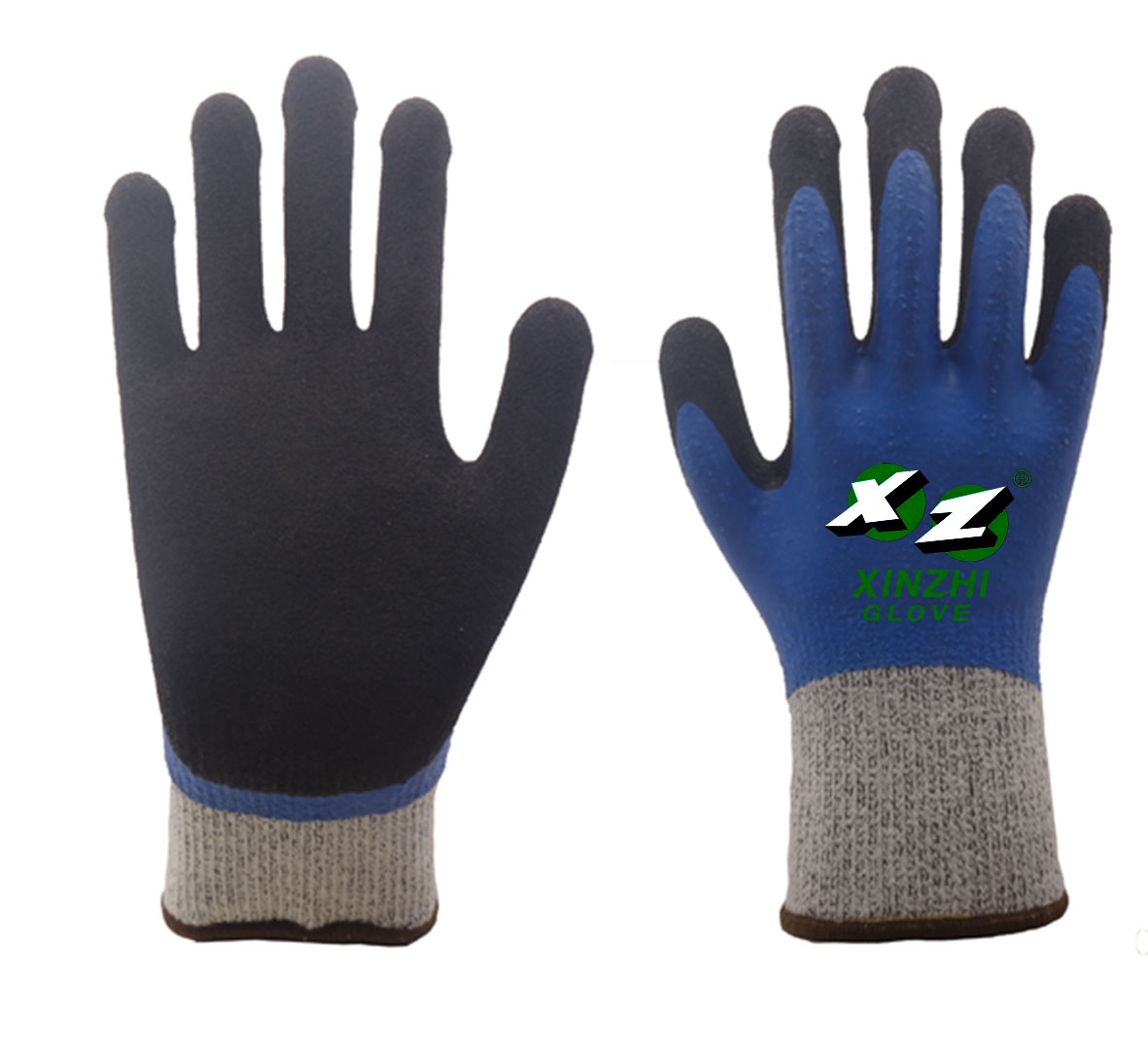
Cold weather cut resistant gloves are engineered with multiple layers that work together to provide protection, warmth, and grip. Using the 10-gauge cold-proof cut gloves with latex coating plus sandy coating as an example, the liner combines HPPE, polyester, steel fiber, spandex, and acrylic fiber to achieve high cut resistance without sacrificing flexibility. The fleeced acrylic loop yarn adds thermal insulation and a softer feel, while the full latex coating helps prevent liquid penetration. The double-dipped sandy latex coating on the palm and fingertips improves abrasion resistance and provides a more secure grip in demanding conditions.
This combination allows the gloves to perform across three critical areas: keeping hands warm in low temperatures, protecting against sharp hazards, and maintaining grip in wet or oily environments. Achieving all three requires careful material selection and manufacturing expertise, which is why these gloves are becoming increasingly important in high-risk industries.
Oil and Gas: Where Cold Meets Sharp Every Day
The oil and gas industry is one of the most challenging environments for hand protection. Workers on rigs, refineries, and outdoor facilities often handle heavy equipment, steel cables, metal components, and rough pipes in freezing conditions.
Why Oil and Gas Operations Need Advanced Hand Protection
Cold temperatures can make standard cut-resistant gloves stiff and uncomfortable, reducing hand flexibility and increasing safety risks. Meanwhile, ordinary insulated gloves may provide warmth but cannot withstand frequent contact with sharp edges and abrasive surfaces.
Cold weather cut resistant gloves provide a balanced solution by combining thermal insulation with cut protection. The insulated liner helps maintain finger movement and grip control, while the cut-resistant layer protects against hazards such as drilling equipment, pipe fittings, and metal containers. For operations in extremely cold regions, some models are designed to perform at temperatures as low as -15°C or below.
Improving Safety in Harsh Environments
Oil and gas workers face multiple hazards at the same time, and cold-induced numbness can make existing risks even worse. Gloves that help both warmth and cut protection workers maintain better control when handling equipment, reducing the likelihood of injuries caused by reduced dexterity and sharp materials.
Cold Storage and Food Processing: Protection in Freezing Conditions
Cold storage facilities often operate at temperatures far below normal working conditions. Employees may spend hours handling frozen products, metal shelving, packaging materials, and pallet straps that can create both cold exposure and cut hazards.
Meeting the Growing Needs of Cold Chain Operations
As cold chain logistics continues to expand, businesses are looking for PPE that can handle more demanding environments. Cold weather cut resistant gloves are increasingly used in these applications because they address two major challenges at once: keeping hands functional in cold temperatures and protecting against sharp workplace hazards.
The thermal liner helps maintain comfort during long shifts, while the cut-resistant structure protects against risks such as box cutters, sharp packaging edges, and damaged pallets. Latex or similar coatings also improve grip when handling frozen products or slippery surfaces.
Supporting Food Processing Workers
Food processing environments require gloves that protect while remaining practical for daily use. Workers handling frozen meat, cutting tools, and sharp packaging materials need reliable hand protection that performs well in refrigerated conditions. Properly coated gloves help improve handling confidence while supporting safer operations.
Construction and Winter Site Work: Maintaining Safety in Cold Weather
Construction projects rarely stop because of winter conditions. However, low temperatures introduce additional challenges that affect worker safety and productivity.
Challenges on Winter Construction Sites
Construction workers regularly handle rebar, metal framing, concrete components, and power tools—all of which may create sharp-edge hazards. Cold temperatures can reduce finger flexibility and grip strength, making precise tasks more difficult and increasing the chance of dropped materials or hand injuries.
Cold weather cut resistant gloves help address these risks by providing insulation, cut protection, and improved grip. The thermal layer keeps hands warmer, the cut-resistant liner protects against sharp materials, and the coated surface helps workers maintain control when handling tools or materials in wet and icy conditions.
Supporting Productivity Along With Safety
Hand protection is not only about preventing injuries. Cold hands can slow down work, reduce efficiency, and increase the need for frequent breaks. Gloves that combine warmth with reliable protection allow workers to remain productive for longer periods, helping companies maintain project schedules during winter operations.
Warehousing and Logistics: The Unseen Winter Hazard
Warehouses are not all climate-controlled. Many are unheated spaces where winter temperatures drop well below freezing. Workers in these environments handle everything from sharp metal parts to boxes with rough edges, often while operating forklifts or other equipment.
The overlooked risk
Warehousing and logistics are among the largest employers of manual labor in most economies, yet the specific hazards of winter work in these environments are often overlooked. Workers loading trucks in freezing temperatures, handling inventory with sharp edges, or unpacking shipments with box cutters face both cold exposure and cut risks simultaneously.
Cold weather cut resistant gloves provide a straightforward solution. The thermal protection keeps hands warm during extended exposure to cold. The cut resistance protects against the sharp edges that are part of daily warehouse work. And the grip coating ensures that workers can handle items securely, reducing the risk of dropped loads and associated injuries.
Transportation and Delivery: On the Road in Winter
Truck drivers, delivery workers, and logistics personnel spend significant time outdoors in winter conditions. Loading and unloading cargo, securing loads with straps and chains, and handling equipment all require hand protection.
The mobile workforce
Transportation workers face a unique challenge: they move between environments. A driver might spend hours in a heated cab, then step out into freezing temperatures to secure a load. Gloves need to be easy to put on and take off, provide warmth during outdoor exposure, and offer protection during loading and unloading tasks.
Cold weather cut resistant gloves fit this use case well. The seamless construction provides comfort and breathability, making them suitable for extended wear. The cut resistance protects during load-securing tasks that involve sharp edges. And the thermal properties keep hands warm during the outdoor portions of the job.
How Do Cold Weather Cut Resistant Gloves Compare to Other Options?
| Glove Type | Cold Protection | Snijweerstand | Grip in Wet/Oily Conditions | Behendigheid | Best Use Case |
|---|---|---|---|---|---|
| Cold Weather Cut Resistant (Latex/Sandy) | Uitstekend | High (A5/Level 5) | Uitstekend | Goed | Oil & gas, cold storage, construction |
| Standard Cut-Resistant | Geen | Hoog | Varies | Uitstekend | Indoor, warm environments |
| Basic Winter Work Gloves | Goed | None or Low | Slecht | Slecht | General cold weather, low hazard |
| Nitrile Cold-Weather Cut Gloves | Goed | Matig | Uitstekend | Goed | Oily/greasy cold environments |
| Thermal Impact Gloves | Uitstekend | Matig | Goed | Matig | High-impact cold environments |
What this comparison reveals is that cold weather cut resistant gloves occupy a unique position. They are the only category that delivers meaningful protection across all four dimensions: cold, cuts, grip, and dexterity. Standard cut-resistant gloves fail in cold. Basic winter gloves fail on cuts. Specialty gloves often compromise on one dimension to excel in another.
The Numbers Behind the Demand
The market data supports what safety professionals already know: demand for this category is growing rapidly.
The global cut resistant gloves market was valued at US$1.317 billion in 2024 and is forecast to reach US$1.626 billion by 2031. More specifically, the cut resistant insulated gloves market—the exact category that includes cold weather cut resistant gloves—is projected to expand from USD 1.5 billion in 2023 to approximately USD 2.8 billion by 2032, driven by a robust CAGR of 6.5%.
The global cold protection gloves market, a closely related category, was valued at approximately RMB 1.67 billion (about USD 230 million) in 2024 and is expected to reach RMB 2.41 billion by 2031, with a CAGR of 5.4%.
What is driving this growth? Several factors: increasing awareness of workplace safety, stricter regulatory standards from bodies like OSHA, the expansion of cold chain logistics, and technological advancements in glove materials that make dual-protection gloves more effective and comfortable than ever before.
Understanding the Safety Standards
For procurement managers and safety officers, understanding the standards behind these gloves is critical.
ANSI/ISEA 105 is the North American standard for cut resistance, rating gloves from A1 (lowest) to A9 (highest). An A5 rating, which is common in cold weather cut resistant gloves, indicates protection suitable for handling sheet metal and glass.
NL 388 is the European standard, which uses a numerical rating system for cut resistance from 1 to 5. The standard also includes abrasion, tear, and puncture ratings. A glove with an EN388 rating of 4X44EP, for example, indicates specific performance levels across these categories.
EN 511 specifically addresses cold protection, rating gloves for convective cold, contact cold, and water permeability.
For buyers and manufacturers, these standards provide a common language. When a factory specifies that its cold weather cut resistant gloves meet certain ANSI or EN levels, it is making a verifiable claim about performance.
For Factories and Wholesale Buyers: What the Market Expects
Behind the end-user demand is a sophisticated wholesale and manufacturing ecosystem. Factories producing cold weather cut resistant gloves face specific expectations from their B2B customers.
-
Quality and consistency
Wholesale buyers prioritize consistent quality above almost everything else. A factory that delivers gloves with variable cut resistance or inconsistent coatings will lose business quickly. The manufacturing process—from yarn selection to knitting to coating to curing—must be tightly controlled.
-
Customization capabilities
Retailers want exclusive colors and branding. Hotel and hospitality buyers want specific sizing. Industrial customers want particular coatings for their specific environments. Factories that offer customization options—size, color, liner material, coating type, impact pattern, and packaging—are capturing an outsized share of the wholesale market.
-
Supply chain reliability
The cold weather cut resistant gloves market is seasonal in many regions, with demand spiking in late summer and fall as companies prepare for winter. Factories that can scale production to meet seasonal demand spikes while maintaining quality are highly valued by distributors and retailers.
Where Do These Gloves Make the Biggest Difference?
Cold weather cut resistant gloves are designed for workplaces where cold temperatures and cut hazards exist at the same time. They provide reliable protection for industries including:
- Oil and gas operations exposed to freezing conditions and sharp equipment
- Cold storage and food processing facilities handling frozen products
- Winter construction sites with metal, tools, and abrasive materials
- Warehouses and logistics centers operating in low-temperature environments
- Transportation teams working between indoor and outdoor conditions
By combining warmth, cut protection, and grip performance, these gloves help workers maintain safety and efficiency without compromising comfort.
For companies looking for dependable winter hand protection, our 10G A5 Cold-proof Cut Gloves with Latex Coating Plus Sandy Coating offer a practical solution for demanding applications. With options for customized sizing, colors, and packaging, we support wholesale buyers, distributors, and industrial partners with flexible supply solutions.
Contact us to request samples or discuss your requirements for cold weather cut resistant gloves.