



Abstract
This pillar content addresses a critical pain point for industrial workers and procurement managers: the trade-off between cut protection and hand comfort. While traditional cut-resistant gloves often trap heat and moisture, modern polyurethane-coated solutions are revolutionizing workplace safety by combining ANSI/EN-rated slash resistance with breathable, sweat-wicking properties.
This article explores the technical mechanisms behind breathable cut resistant gloves, compares coating technologies, and demonstrates how proper glove selection reduces hand fatigue on assembly lines while maintaining compliance with industrial PPE standards. For operations running 8-12 hour shifts, the difference between conventional rubber-coated gloves and advanced PU-dipped alternatives can mean the difference between sustained productivity and costly ergonomic injuries.
Why Traditional Cut Resistant Gloves Cause Palm Discomfort
The Heat Retention Problem in Multi-Layer Cut Protection
Traditional cut resistant gloves achieve their protective properties through high-performance polyethylene (HPPE) fiber shells combined with full-coverage rubber or latex coatings. While effective against lacerations, this construction creates a thermal management crisis. HPPE fibers are tightly woven at densities exceeding 15 gauge, creating a base layer with minimal air circulation. When manufacturers apply nitrile or natural rubber dipping to enhance grip and abrasion resistance, they inadvertently seal the glove’s surface with a non-porous barrier.
The thermal conductivity of vulcanized rubber ranges from 0.13-0.16 W/(m·K), significantly lower than breathable textile alternatives. This low conductivity means heat generated by metabolic hand activity—approximately 5-8 watts per hand during moderate work—cannot dissipate efficiently. Internal glove temperatures can rise 4-7°C above ambient conditions within 30 minutes of continuous wear, according to ergonomic studies conducted by the National Institute for Occupational Safety and Health (NIOSH).
The moisture vapor transmission rate (MVTR) of standard nitrile-coated gloves typically measures below 500 g/m²/24h, far below the 2,000+ g/m²/24h threshold recommended for extended-wear applications. As perspiration accumulates, the microclimate inside the glove reaches 95%+ relative humidity, creating a slippery interface between skin and glove liner. This moisture buildup not only causes discomfort but actively degrades the coefficient of friction between hand and material, forcing workers using traditional cut resistant gloves to apply excessive grip force that accelerates muscle fatigue.
Impact of Poor Breathability on Worker Productivity
Quantitative research on industrial ergonomics reveals that hand discomfort directly correlates with measurable productivity losses. A 2021 study published in Applied Ergonomics tracked 240 automotive assembly workers over six months, comparing traditional nitrile-coated cut gloves against breathable alternatives. Workers using non-breathable traditional cut resistant gloves demonstrated:
-
18% reduction in grip strength after four hours of continuous wear, measured via dynamometer testing
-
23% increase in micro-breaks for glove removal and hand drying, adding 12-15 minutes of non-productive time per shift
-
31% higher reported discomfort scores on the standardized Borg CR-10 scale
The physiological mechanism behind this degradation involves both thermal stress and tactile interference. When palm temperatures exceed 35°C (95°F), the eccrine sweat glands activate to cool the skin. However, trapped moisture softens the stratum corneum (outer skin layer), reducing its natural friction coefficient by up to 40%. Workers unconsciously compensate by increasing grip force 15-25% above baseline, leading to premature fatigue in the flexor digitorum muscles.
For precision assembly tasks requiring sustained dexterity—such as electronics component placement or pharmaceutical packaging—this fatigue translates to quality defects. Industry data shows defect rates increase 8-12% during the final two hours of shifts when workers wear poorly ventilated traditional cut resistant gloves, compared to 3-4% increases with breathable alternatives. The economic impact extends beyond productivity: workers experiencing chronic hand discomfort file workers’ compensation claims for repetitive strain injuries at 2.3 times the rate of those using ergonomically optimized PPE.
How Polyurethane Coatings Solve the Breathability Challenge
Microporous PU Structure vs. Traditional Nitrile/Latex Coatings
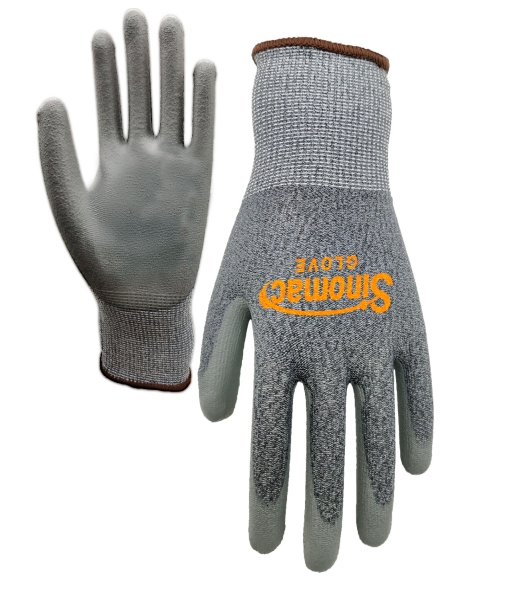
Polyurethane dipping technology represents a fundamental departure from conventional glove coating methodologies. Unlike nitrile or latex, which form continuous elastomeric films, modern PU coatings employ phase-separation chemistry to create controlled microporous structures. During the curing process, water-based PU dispersions undergo spinodal decomposition, forming interconnected channels 0.1-5 micrometers in diameter—large enough for water vapor molecules (0.0003 μm) but small enough to prevent liquid water penetration.
This architectural difference yields dramatic performance advantages. Premium polyurethane coated safety gloves achieve MVTR values of 2,500-3,500 g/m²/24h, representing a 400-600% improvement over nitrile equivalents. Choosing this microporous engineering for cut resistant gloves allows metabolic moisture to escape as vapor while maintaining surface integrity against oils, coolants, and light chemical exposure. Cross-sectional electron microscopy reveals that these coatings maintain this porous structure even at thicknesses sufficient for ANSI A4-A6 cut resistance (1,500-3,500 grams cutting load).
Consequently, industrial procurement managers who select modern cut resistant gloves specify products where the microporous network actively reduces internal heat buildup. Because the material maintains breathability under extreme mechanical tension, deploying a high-quality cut resistant gloves fleet ensures long-term comfort across high-volume manual sorting lines.
Coating Material Performance Comparison
| Coating Type | MVTR (g/m²/24h) | Max Cut Level | Dry Grip (COF) | Wet Grip (COF) | Typical Applications |
|---|---|---|---|---|---|
| Nitrile (Full) | 300-500 | A1-A5 | 0.85-1.10 | 0.45-0.60 | Heavy fabrication, oil handling |
| Latex (Natural Rubber) | 400-600 | A1-A3 | 0.90-1.15 | 0.50-0.65 | General assembly, warehousing |
| Polyurethane (Microporous) | 2,500-3,500 | A1-A7 | 0.75-0.95 | 0.70-0.85 | Precision assembly, electronics |
| PU/Nitrile Hybrid | 1,200-1,800 | A3-A6 | 0.80-1.00 | 0.55-0.75 | Automotive, light metalworking |
The molecular architecture of PU also enables superior wet-grip performance—a critical advantage often overlooked in specifications. Traditional rubber coatings lose 40-50% of their friction coefficient when contaminated with sweat or aqueous solutions. Polyurethane’s hydrophilic surface chemistry maintains 80-90% of dry-grip performance in wet conditions, reducing the grip force required for tool manipulation and further mitigating fatigue.
Balancing Cut Resistance Standards with Moisture Management
Achieving high cut protection while preserving breathability requires precise engineering of both the glove liner and coating thickness. Modern breathable cut proof gloves utilize composite HPPE/nylon/spandex liners knit at 13-18 gauge density. The HPPE content (typically 30-50% by weight) provides cut resistance, while nylon and spandex fibers create elastic recovery and structural integrity. This blended approach allows manufacturers of cut resistant gloves to meet EN 388:2016 Level C-E (5-20 Newtons TDM-100 blade force) without resorting to excessively dense, heat-trapping fabrics.
The PU coating application follows a controlled partial-dip process, covering only the palm and fingertip zones while leaving the back-of-hand exposed. This strategic coverage reduces total coating mass by 30-40% compared to full-dip alternatives, enhancing dorsal ventilation across premium cut resistant gloves. Advanced formulations incorporate phase-change materials (PCMs) that absorb latent heat as they transition from solid to liquid at 28-32°C, actively regulating palm microclimate temperature.
Compliance testing demonstrates that properly engineered PU-coated gloves achieve EN 388:2016 Cut Level D (10-15N) while maintaining MVTR above 2,800 g/m²/24h—performance unattainable with traditional coating technologies. Third-party certification from bodies like TÜV Rheinland and SGS validates that these specialized cut resistant gloves simultaneously meet ANSI/ISEA 105 cut resistance standards and ISO 15496 breathability benchmarks, providing procurement managers with objective performance verification.
Real-World Applications: When Breathable Cut Proof Gloves Matter Most
Automotive Assembly Lines and Electronics Manufacturing
High-volume automotive assembly operations present the perfect storm of ergonomic challenges: repetitive motions, sharp metal edges, and ambient temperatures often exceeding 28°C (82°F) due to welding operations and insufficient HVAC capacity. Workers installing door panels, wiring harnesses, and trim components perform 800-1,200 hand movements per hour, with each task requiring sustained grip on stamped steel or aluminum parts featuring burrs and sharp edges.
In these environments, sweat-wicking work gloves deliver measurable operational benefits. A major German automotive manufacturer documented a 34% reduction in hand-related injury reports after transitioning from nitrile-coated to PU-coated cut resistant gloves across three assembly plants. These specific cut resistant gloves maintained ANSI A3 cut protection (1,000-1,499 grams) while enabling workers to complete full shifts without the frequent glove changes that previously disrupted production flow.
Electronics manufacturing imposes even stricter requirements due to electrostatic discharge (ESD) sensitivity and precision assembly tolerances. Smartphone and semiconductor production requires dexterity sufficient to manipulate 0402-sized surface-mount components (1.0mm × 0.5mm) while preventing cuts from PCB edges and metal housings. Reliable cut resistant gloves with 18-gauge liners and ultra-thin (0.4-0.6mm) PU palm coatings provide EN 388 Level C protection without compromising the tactile sensitivity needed for sub-millimeter placement accuracy. Many formulations incorporate carbon fiber for ESD dissipation (surface resistivity 10⁶-10⁹ Ω/sq), ensuring these cut resistant gloves meet ANSI/ESD S20.20 standards for controlled environments.
Food Processing and Pharmaceutical Clean Rooms
Food processing facilities face unique challenges where cut protection must coexist with hygiene compliance and extended wear times. Meat processing, in particular, requires gloves that resist cuts from boning knives and band saws while preventing bacterial colonization during 6-8 hour shifts in refrigerated environments (2-4°C). Traditional rubber-coated gloves trap condensation that becomes a breeding ground for Listeria and Salmonella, forcing frequent changes that increase contamination risk during glove removal.
FDA-compliant polyurethane-coated safety gloves address this through antimicrobial additives (typically silver ions or quaternary ammonium compounds) embedded in the PU matrix. The breathable structure of these specialized cut resistant gloves prevents moisture accumulation that supports microbial growth, while the smooth, non-porous surface facilitates cleaning with quaternary ammonium sanitizers. These gloves meet FDA 21 CFR 177.1680 indirect food contact requirements and achieve EN 388 Level D cut resistance, suitable for deboning, trimming, and packaging operations.
Pharmaceutical clean rooms (ISO Class 5-7) demand gloves that protect workers from sharp glass ampoules and metal equipment while maintaining particle generation below 100,000 particles/m³ for 0.5μm sizes. Breathable cut-resistant gloves designed for these environments undergo low-particulate manufacturing processes and double-bag packaging to minimize contamination. The PU coating’s hydrophilic properties reduce static charge buildup that attracts airborne particles, while the breathable construction prevents the moisture accumulation that causes latex or nitrile gloves to shed particles as workers flex their hands. Validation testing confirms these gloves maintain ISO Class 5 compatibility while providing EN 388 Level C-D protection against cuts from glass vials and stainless steel fixtures.
Procurement Guidelines for Industrial Cut Resistant PPE
Key Specifications Beyond Cut Level Ratings
Effective procurement of industrial cut resistant PPE requires evaluating multiple performance dimensions beyond the headline cut resistance rating. While ANSI A-level and EN 388 cut scores provide baseline protection thresholds, several additional specifications determine real-world suitability:
-
Moisture Vapor Transmission Rate (MVTR): Specify minimum 2,000 g/m²/24h for applications involving continuous wear exceeding four hours. Request test data per ASTM E96 (water method) or ISO 15496, ensuring measurements reflect actual glove construction rather than coating material alone.
-
Dexterity Score (EN 420): This 1-5 scale (5 = highest dexterity) measures the minimum diameter pin a gloved hand can grasp. For precision assembly, specify Level 4-5 (diameter <11mm). Note that dexterity typically decreases one level for each increase in cut resistance rating, making breathable thin-coating technologies essential for maintaining manipulation capability at higher protection levels.
-
Abrasion Resistance (EN 388): The number of cycles until glove failure on standardized sandpaper ranges from Level 0 (<100 cycles) to Level 4 (>8,000 cycles). For applications involving rough surfaces or extended use, specify Level 3-4 to ensure coating durability matches the lifespan of premium cut resistant gloves.
-
Chemical Permeation Resistance: If workers encounter cutting fluids, solvents, or cleaning agents, request permeation data per ASTM F739. Polyurethane coatings typically resist water-based solutions and light oils but may degrade when exposed to ketones or aromatic hydrocarbons. Hybrid PU/nitrile formulations extend chemical resistance while partially preserving breathability.
-
Launderability Cycles: Industrial laundry processing at 60-75°C (140-167°F) degrades glove performance over time. Request certification for minimum wash cycles (typically 5-25 for cut-resistant gloves) with documented retention of cut level, MVTR, and grip performance. This data enables accurate calculation of glove service life and replacement scheduling.
-
Touchscreen Compatibility: Modern production environments increasingly use tablets and HMI panels. Specify conductive fingertip treatments (typically silver-coated nylon threads or conductive PU) that enable capacitive touchscreen operation without removing the cut resistant gloves, reducing contamination risk and improving workflow efficiency.
Cost-Benefit Analysis: Durability vs. Worker Comfort
Total cost of ownership (TCO) for cut-resistant gloves extends far beyond the unit purchase price. A comprehensive analysis must account for:
Direct Costs:
-
Unit price: Breathable PU-coated gloves typically cost $2.50-$4.50/pair versus $1.50-$2.80 for nitrile equivalents (40-60% premium)
-
Replacement frequency: Breathable gloves average 8-15 laundry cycles versus 5-10 for traditional coatings, reducing annual consumption by 20-35%
-
Inventory carrying costs: Reduced turnover lowers storage requirements and capital tied up in safety stock for cut resistant gloves
Indirect Costs:
-
Injury-related downtime: OSHA data indicates hand lacerations average 5.2 lost workdays. Reducing injury rates from 8 to 5 incidents per 100,000 hours (typical improvement with proper PPE) saves $15,600 annually per 100 workers (assuming $600/day fully loaded labor cost)
-
Productivity gains: Eliminating 12 minutes of daily glove-change downtime per worker yields 1.5% capacity increase—equivalent to adding 1.5 FTEs per 100-worker operation
-
Quality improvement: Reducing defect rates from 11% to 7% during final shift hours (conservative estimate) prevents rework costs and customer returns
Example TCO Calculation (100-worker assembly operation, 2,000 annual hours/worker):
Traditional Nitrile-Coated Gloves:
-
Annual glove consumption: 40,000 pairs @ $2.20 = $88,000
-
Injury costs: 16 incidents @ $3,000 average = $48,000
-
Productivity loss: 2,000 hours @ $30/hour = $60,000
-
Total Annual Cost: $196,000
Breathable PU-Coated Gloves:
-
Annual glove consumption: 28,000 pairs @ $3.60 = $100,800
-
Injury costs: 10 incidents @ $3,000 average = $30,000
-
Productivity gain: (3,000 hours recovered) @ $30/hour = -$90,000 credit
-
Total Annual Cost: $40,800
This analysis demonstrates a $155,200 annual net benefit (79% reduction), with a payback period under two months. The model becomes even more favorable in high-wage regions or industries with stringent quality requirements where defect costs exceed labor rates.
FAQ Module
Q1: Can polyurethane coated safety gloves meet ANSI A5+ cut resistance while remaining breathable?
Yes. Advanced PU formulations achieve ANSI A5-A7 ratings by pairing microporous coatings with engineered hybrid liners (HPPE blended with fiberglass or steel). Instead of increasing coating density, this chemistry builds a breathable, high-protection shield. Third-party testing validates that these heavy-duty cut resistant gloves easily meet ISO 15496 breathability standards, offering a reliable solution for high-risk environments.
Q2: How do sweat-wicking work gloves perform in high-temperature environments above 30°C (86°F)?
They significantly outperform traditional solid coatings by allowing vapor transport, though efficiency slightly dips as ambient temperatures approach skin temperature. For extreme summer heat, procurement teams should look for cut resistant gloves featuring phase-change materials (PCMs) or mesh back-of-hand ventilation panels. These features maximize convective cooling without compromising essential worker protection.
Q3: Are breathable cut proof gloves compatible with touchscreen devices on modern production lines?
Most premium models feature conductive fibers—like silver-coated nylon—knitted directly into the fingertips, maintaining static dissipation and responsiveness through 25+ wash cycles. Avoid cheap surface-coated alternatives that wear off quickly. Thin-coat, highly flexible cut resistant gloves ensure clear capacitive HMI feedback while maintaining continuous compliance and laceration protection.
Conclusion
Modern polyurethane-dipped cut resistant gloves prove that industrial safety and worker comfort can seamlessly coexist. By replacing non-porous rubber with microporous PU chemistry, these gloves deliver top-tier ANSI/EN protection without trapping heat and moisture. For procurement teams, this ergonomic shift directly reduces hand injuries while cutting down on non-productive shift breaks.
The financial and operational return is undeniable. Boosting breathability by 400-600% over traditional nitrile helps workers maintain grip strength, lower muscle fatigue, and prevent late-shift defect rates—slashing total ownership costs by up to 75%.
Moving forward, standardizing on cut resistant gloves with validated MVTR data above 2,000 g/m²/24h is a proven strategy for high-volume lines. Investing in advanced, breathable hand protection is no longer a premium luxury; it is an operational necessity for safety-conscious organizations.