



Introduction
As you navigate the sea of A-rated gloves, it can feel like wading through alphabet soup. You want to keep your workers safe without overspending or sacrificing comfort for protection you don’t really need. A3 cut resistant gloves are ideal for light to moderate cut hazards, while A4 cut resistant safety gloves are built for moderate to high-risk tasks—like handling sharp metals, glass, or heavy assembly—where the risk of laceration is significantly higher. A4 gloves offer roughly 500 grams more cut resistance than A3 gloves (1,500g+ vs. 1,000g+), yet they remain lightweight, flexible, and more comfortable than many higher-level alternatives. The right choice depends entirely on the hazards in your workplace. For frequent contact with sharp edges, A4 cut resistant safety gloves provide a much-needed safety buffer.
Here’s what this difference means for your day-to-day operations.
First, a Quick Crash Course on Cut Resistance Standards
Before we dive into the A3 vs. A4 comparison, let’s clear up how these ratings work. The most widely recognized system is the ANSI/ISEA 105 standard, which measures how many grams of cutting force a glove material can withstand before it gets cut through.
The scale runs from A1 to A9, with each level representing a higher resistance in grams of force:
| ANSI Cut Level | Cut Resistance (grams), | Risk Level |
|---|---|---|
| A1 | 200 – 499 | Very low |
| A2 | 500 – 999 | Low |
| A3 | 1,000 – 1,499 | Moderate |
| A4 | 1,500 – 2,199 | Moderate to high |
| A5 | 2,200 – 2,999 | High |
| A6 | 3,000 – 3,999 | High to very high |
| A7 | 4,000 – 4,999 | Very high |
| A8 | 5,000 – 5,999 | Very high to extreme |
| A9 | 6,000+ | Extreme |
This table is based on the ANSI/ISEA 105-2016 standard (ASTM F2992-15 testing method), which expanded from the old five-level scale to nine levels for more precise selection.
When you see a glove labeled “A4 cut resistant safety gloves,” it means it can withstand between 1,500 and 2,199 grams of cutting load. That’s a meaningful jump from A3’s 1,000–1,499 gram range.
Breaking Down A3 Cut Resistant Gloves: Good for Light Work
A3 is often the baseline for “good enough” cut protection. These gloves are widely used in environments where the risk of cuts exists, but isn’t extreme. Think warehouse sorting, general material handling, light assembly lines, and packaging operations.
What A3 gloves are good for:
-
General warehouse work and order picking
-
Hardware assembly and small parts handling
-
Cardboard box cutting and packaging lines
-
Light metal handling (non-sharp edges)
-
Automotive parts sorting and low-risk assembly
Limitations: When you move to sharp sheet metal, glass panes, or heavy stamping operations, A3 gloves just aren’t enough. The blade will cut through with less force than you might expect. One misplaced hand while handling sharp-edged metal could lead to a serious laceration. That’s precisely why safety managers upgrade to A4 cut resistant safety gloves for higher-risk zones.
A3 and below have good cut protection but should only be used where cut risk is lower, such as hardware assembly, warehouse work, and general handling.
Why A4 Cut Resistant Safety Gloves Are a Step Up
Here’s where the real shift happens. A4 cut resistant safety gloves step into moderate-to-high risk territory. They’re engineered to handle sharper edges and heavier cut hazards, but without the bulk and stiffness that often come with higher-level protection. Choosing the right pair of A4 cut resistant safety gloves means you get both safety and agility.
Key characteristics of A4 gloves:
-
Withstands 1,500+ grams of cut force
-
Typically constructed from advanced materials like HPPE (High-Performance Polyethylene), often blended with glass fiber or other reinforcement fibers.
-
Available in ultra-thin gauges (13-gauge, 18-gauge, even 21-gauge) for exceptional dexterity
-
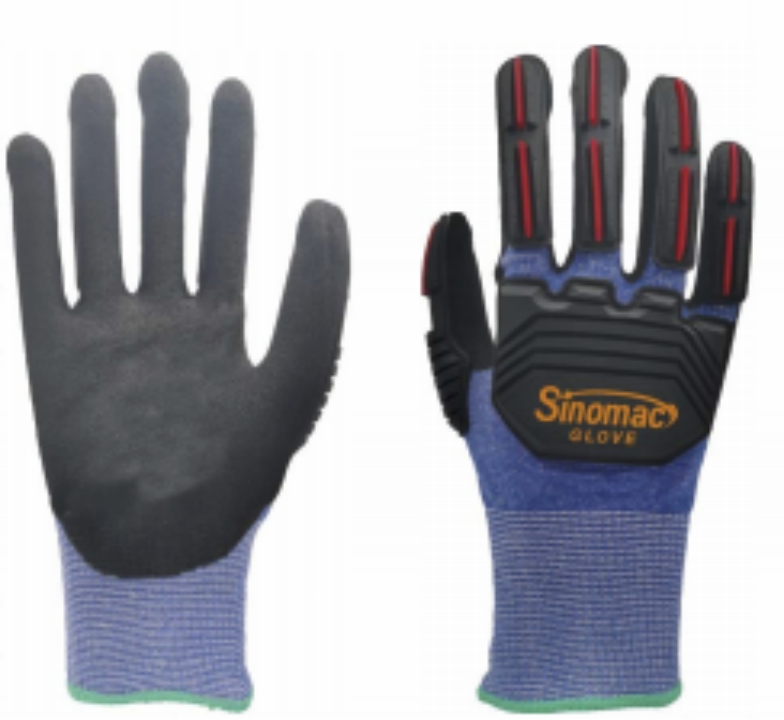
Often feature foam, nitrile, or other coatings for grip in oily or wet conditions.
-
Modern A4 cut resistant safety gloves are also designed for all-day wear without overheating.
A4 and above are mostly used where the risk of cuts and lacerations is much higher, such as handling glass sheets, metal press work, or heavy assembly.
A3 vs. A4: Head‑to‑Head Comparison
Let’s put them side by side with real numbers and practical considerations.
| Feature | A3 Cut Resistant Gloves | A4 Cut Resistant Safety Gloves |
|---|---|---|
| Cut resistance (ANSI) | 1,000 – 1,499 grams | 1,500 – 2,199 grams |
| Typical risk level | Moderate | Moderate to high |
| Best for | Warehouse work, general handling, packaging, light assembly | Metal stamping, glass handling, automotive assembly, sheet metal work |
| Material | HPPE, polyester, or basic composite blends | HPPE + glass fiber or other high‑performance reinforcements |
| Gauge options | Typically, 13‑ or 18‑gauge | Available in 13‑, 18‑, even 21‑gauge for ultra‑dexterity |
| Common coatings | PU, basic nitrile, or uncoated | Foam nitrile, sandy nitrile, or advanced grip coatings |
| Typical thickness | Moderate | Very thin possible (21‑gauge design) |
| Comfort/flexibility | Good for general tasks | Excellent — advanced yarn engineering allows thin yet strong construction |
| Price point | Lower — budget‑friendly | Moderate — higher material cost but not premium‑level expensive |
For most metal fabrication or glass handling lines, A4 cut resistant safety gloves deliver the best balance of protection, comfort, and cost.
Inside the Material Technology: What Makes A4 Gloves Different?
The real story lies in what these gloves are made of. A3 gloves often use simpler material blends — polyester with basic HPPE, or even just treated cotton for lower-level protection. They get the job done for light tasks but hit their limit quickly.
A4 cut resistant safety gloves are a different animal. They use HPPE (High-Performance Polyethylene) as a base — a material that’s lightweight, strong, and cut-resistant on its own. But to push into A4 territory (and beyond), manufacturers blend HPPE with:
-
Glass fiber — adds significant cut resistance without adding thickness; enhances structural strength while maintaining flexibility.
-
Spandex — provides four‑way stretch, allowing the glove to conform naturally to hand contours for flexible operation.
-
Nylon — improves breathability and reduces stuffiness for extended continuous wear.
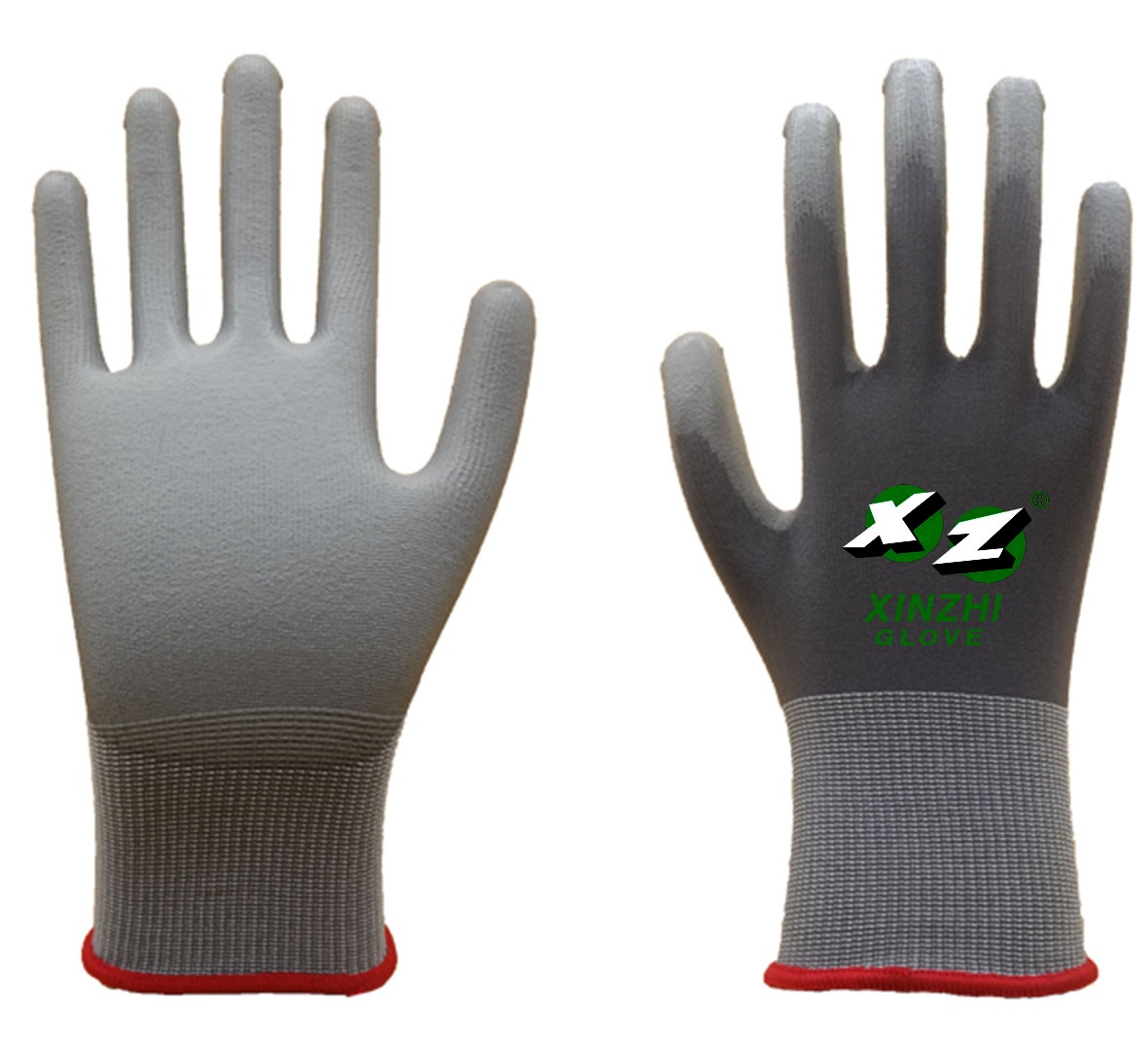
Then there’s the coating. Many A4 gloves — including products like the 21‑gauge model with foam nitrile coating — use foam nitrile on the palm and back. This isn’t just for show. Foam nitrile provides:
-
Superior grip in dry, wet, and light oil environments
-
Excellent abrasion resistance for longevity
-
Breathability — the foam structure allows air circulation, keeping hands cooler
-
Durability — lasts longer than standard coatings under repeated use
When you invest in A4 cut resistant safety gloves with foam nitrile, you’re not just buying cut protection — you’re buying grip and comfort that keeps workers wearing them.
Real‑World Applications: Where Does A4 Really Shine?
Let’s get specific. If you’re working in these environments, A4 cut resistant safety gloves are likely the minimum you should consider.
Metal fabrication and stamping. Sharp sheet metal edges, freshly stamped parts, and trimming operations. A study found that cut-resistant gloves rated ANSI Level A4 and above are seeing a 15% adoption increase in metal fabrication industries — and that trend is accelerating. Workers there consistently prefer A4 cut resistant safety gloves because they offer real protection without sacrificing feel.
Automotive assembly and repair. Think about handling body panels, trimming excess material, working with metal brackets, and chassis components. The automotive industry accounts for the largest share of the industrial gloves market due to high usage of mechanical protection.
Glass handling. Float glass, window panes, and mirrors — all have razor‑sharp edges. Glass industry applications include handling glass sheets, cutting, and installation. A4 cut resistant safety gloves are considered the standard entry point for safe glass work.
Logistics and warehousing — with a twist. Not all warehouse work needs A4. But if your warehouse handles metal parts, sharp components, or heavy industrial goods, A4 gives you breathing room that A3 doesn’t.
Precision assembly and electronics manufacturing. Here’s the surprising part: high‑gauge A4 gloves — especially 21‑gauge designs — are thin enough for precision work but strong enough to protect against unexpected sharp edges. You don’t have to choose between safety and dexterity anymore.
Comfort and Dexterity: Why Higher Level Doesn’t Always Mean Bulkier
A common misconception: “Higher cut level = thicker, stiffer gloves.” That used to be true, but not anymore. Advances in yarn engineering and knitting technology have changed the game.
21‑gauge A4 gloves are a perfect example. Gauge refers to the number of stitches per inch of knitted fabric. Higher gauge means finer stitches, which means:
-
Thinner glove material
-
Better tactile sensitivity
-
Less hand fatigue during long shifts
-
More breathability
A 13‑gauge glove is standard and durable. An 18‑gauge is thinner and more flexible. But 21‑gauge is as thin as it gets without sacrificing cut protection. That’s a breakthrough for industries where precision matters — electronics assembly, small parts handling, quality inspection. The best A4 cut resistant safety gloves now come in 21‑gauge knit, giving you near-bare-hand sensitivity with A4-level safety.
With the right A4 glove, workers can feel what they’re doing, manipulate small components, and stay protected — without the “wearing a winter glove in summer” experience.
Workplace Safety Regulations: What OSHA and Other Bodies Require
Here’s a reality check: OSHA doesn’t specify a particular ANSI cut level for any job. What OSHA requires — under 29 CFR 1910.138 — is that employers select and require appropriate hand protection when employees‘ hands are exposed to hazards such as cuts and lacerations.
That means you need to assess the actual hazards in your workplace. If workers handle sharp sheet metal, glass, or stamped parts, an A3 glove likely isn’t appropriate. OSHA has cited employers for failing to require cut‑resistant gloves in environments where cut hazards are present. Many safety auditors now specifically recommend A4 cut resistant safety gloves for mixed environments with moderate-to-high sharp edges.
The general guideline from safety experts:
-
A1–A2: Very low risk (paper cuts, handling non‑sharp items)
-
A3: Light risk (general handling, packaging, warehouse sorting)
-
A4–A5: Moderate to high risk (metal handling, glass, stamping, heavy assembly)
-
A6–A9: Very high to extreme risk (recycling, heavy fabrication, rescue operations)
When in doubt, err on the side of caution. An A4 glove costs slightly more than an A3, but a single laceration costs far more — in medical bills, lost work time, and worker morale.
Cost Considerations: Short‑Term Savings vs. Long‑Term Safety
Let’s talk dollars — because that’s where decisions actually get made.
An A3 glove might cost 10–20% less than an A4 glove upfront. On a bulk order of 1,000 pairs, that’s real money. But here’s the counterpoint:
-
Workers’ compensation claims for hand lacerations average thousands of dollars per incident — not to mention lost productivity and replacement training.
-
OSHA recordables affect your safety score and insurance premiums.
-
Worker confidence — when people feel well‑protected, they work faster and more efficiently.
The global cut‑resistant gloves market is projected to reach USD 3.4 billion by 2033, expanding at a CAGR of 4.2%. Part of that growth is driven by stricter safety regulations, but another part is simply smarter procurement — companies realizing that the incremental cost of A4 cut resistant safety gloves over A3 is trivial compared to the cost of one serious injury.
A Quick Note on the EN388 Standard (For Global Sourcing)
If you’re sourcing gloves internationally — especially from Europe — you’ll encounter the EN 388:2016 standard instead of ANSI. EN388 uses a different scale: Level A through Level F, measured in Newtons of force (not grams).
-
Level A: ≥2 Newtons
-
Level B: ≥5 Newtons
-
Level C: ≥10 Newtons
-
Level D: ≥15 Newtons
-
Level E: ≥22 Newtons
-
Level F: ≥30 Newtons
An A4 ANSI glove often correlates roughly with EN388 Level C or D, but — and this is important — these standards are not directly equivalent. A glove that withstands 10 Newtons (EN Level C) cannot claim to be ANSI A3 without proper testing. Always check both ratings if your operation spans multiple regulatory jurisdictions. And if you’re looking for A4 cut resistant safety gloves that also meet EN388 Level D or higher, check the spec sheet carefully.
FAQ
1. Can I use A4 gloves for food processing?
Yes, as long as they are certified as food-contact safe. Many A4 cut resistant safety gloves with smooth nitrile or PU coatings can be used in food environments, but certification should always be confirmed before use.
2. How long do A4 cut resistant safety gloves typically last?
With foam nitrile coatings and proper maintenance, a typical service life is around 2–4 weeks under daily industrial use. However, highly abrasive environments may shorten their lifespan.
3. Are A4 gloves cut-proof or just cut-resistant?
They are cut-resistant, not cut-proof. No glove can guarantee absolute protection against all cutting forces. A4 cut resistant safety gloves significantly reduce the risk of injury, but cannot eliminate it under extreme force.
4. What’s the difference between foam nitrile and sandy nitrile coating?
Foam nitrile provides better breathability and grip in wet or oily conditions, making it ideal for flexible handling tasks. Sandy nitrile, on the other hand, offers stronger abrasion resistance and is better suited for dry, high-wear applications.
5. Do A4 gloves work with touchscreens?
Many modern A4 cut resistant safety gloves, especially ultra-thin 21-gauge foam nitrile models, are touchscreen compatible. However, performance may vary depending on coating type and glove construction.
Conclusion
Choosing between A3 and A4 cut resistant safety gloves comes down to matching protection with real workplace risks. A3 works for light handling tasks, while A4 gloves are ideal for metal, glass, and sharp-edge environments. The extra 500 grams of cut resistance provides a meaningful safety buffer, and modern high-gauge designs keep them flexible and comfortable.
Don’t settle for the minimum—upgrade to A4 cut resistant safety gloves for better protection and dexterity.
Browse our 21-gauge A4 foam nitrile gloves today or request a bulk quote.