



Introduction
A6 cut resistant impact gloves can still protect hands in heavy oil environments, but performance declines as foam coatings become saturated, grip weakens, and oil exposure reduces cut resistance and impact protection over time.
Most A6 cut resistant impact gloves are tested under clean laboratory conditions, which do not reflect real-world exposure to crude oil, hydraulic fluids, or drilling mud. As a result, actual performance in heavy oil can be significantly lower than rated levels.
In oil and gas operations where hand injuries are common, understanding this gap between certification testing and real working conditions is essential for selecting reliable protective gloves.
Where Ratings Fall Short: Oil Is Not Part of the Test
To understand what happens when A6 cut resistant impact gloves are used in heavy oil environments, you first need to understand what the A6 rating actually means. This is where many buyers misunderstand glove performance.
The ANSI/ISEA 105 standard classifies cut resistance from A1 to A9, with A6 in the high-to-extreme range for industrial cutting and heavy-duty tasks. However, the test is performed on clean, dry materials, meaning liquid contamination is not considered in certification.
This creates a critical gap. Research published in the International Journal of Occupational Safety and Ergonomics shows that exposure to oils and greases can significantly reduce resistance to cutting, puncture, and tearing. These changes are often not visible, which increases the risk of unnoticed performance loss in A6 cut resistant impact gloves.
In simple terms, A6 cut resistant impact gloves that perform well in lab tests may not maintain the same protection after exposure to heavy oil, which is why oilfield applications require gloves specifically designed for wet and oily conditions.
Why Oil Exposure Is Not Covered by Certification
Standards such as EN 388 and ANSI/ISEA 105 test cut resistance using dry mechanical blades under controlled pressure. These methods do not include oil, chemical exposure, or long-term contamination effects.
As a result, when A6 cut resistant impact gloves are used in real oilfield or refinery environments, performance can differ significantly from laboratory results. This is not a flaw in the standards, but a limitation of controlled testing.
Understanding how your specific A6 cut resistant impact gloves behave in oil exposure is essential for selecting the right protection level in high-risk industrial environments.
Three Failures in One Glove
When heavy oil meets A6 cut resistant impact gloves, three failure mechanisms can occur at the same time. None of these is reflected in standard certification tests.
1. Coating saturation and grip failure
The palm coating is the first barrier against oil. Many A6 cut resistant impact gloves use foam nitrile, valued for its balance of oil resistance and grip performance.
However, its porous structure can absorb heavy oil. Once saturated, the coating loses friction, turning from grippy to slippery and increasing the risk of dropped tools and hand fatigue.
In light oil conditions, performance remains stable. In heavy crude or long exposure, however, even quality coatings can be overwhelmed.
2. Cut resistance degradation: the fiber effect
Cut resistance does not come from the coating alone. It is primarily provided by high-performance liners such as HPPE, fiberglass, steel fiber, or para-aramid.
When exposed to oil, these fibers lose internal friction. In dry conditions, fibers lock together to resist blade penetration. In oil-contaminated conditions, they slide more easily, reducing overall cut resistance.
Studies have shown that exposure to oils and greases can reduce resistance to cutting and tearing, even when no visible damage is present. This creates a hidden safety risk in real-world use.
3. Impact protection softening
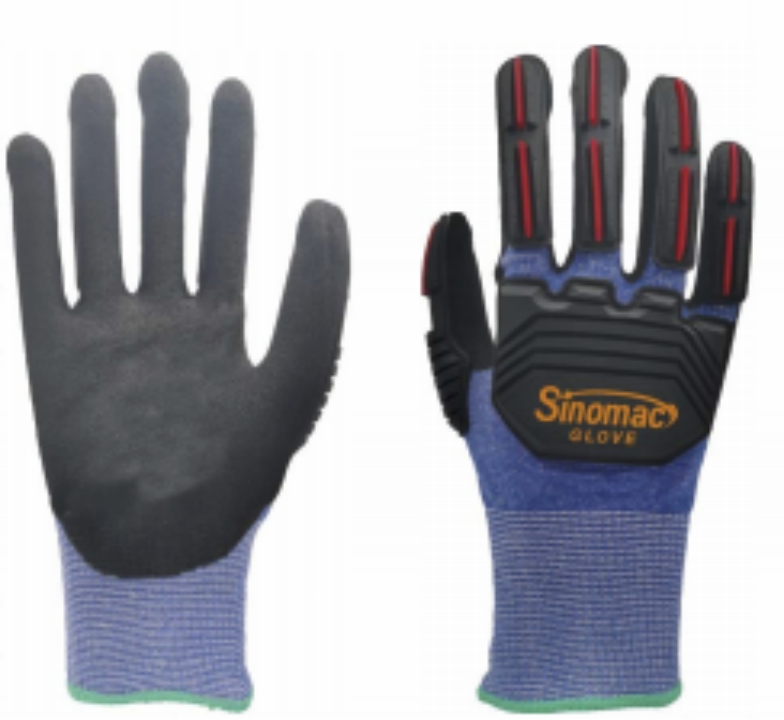
Back-of-hand protection in A6 cut resistant impact gloves typically uses PVC or TPR impact guards.
While resistant to many chemicals, prolonged exposure to heavy hydrocarbons can gradually reduce stiffness and energy absorption. The glove may still look intact, but impact performance can decline without visible warning.
This makes inspection difficult and increases the importance of selecting gloves designed specifically for oil-rich environments.
What Actually Works in Heavy Oil: Real Solutions
Not all A6 cut resistant impact gloves are suitable for heavy oil applications. Only models engineered for chemical and oil exposure can maintain stable performance.
For example, the Honeywell Rig Dog™ Xtreme uses oil-resistant palm construction and multi-layer liners designed for drilling environments. The Tilsatec 55-6142 combines full-dip nitrile with sandy grip surfaces and is tested after washing for performance stability.
The HexArmor® 7200 provides 360° liquid resistance with ANSI A6 cut protection, making it suitable for petrochemical applications. The Globus Skytec Torq Chem X uses a nitrile-PVC hybrid coating for enhanced hydrocarbon resistance.
When selecting A6 cut resistant impact gloves for heavy oil environments, prioritize full-dip coatings, multi-layer construction, and verified oil-resistance testing rather than cut rating alone.
Comparison Table: A6 Cut Resistant Impact Gloves for Heavy Oil Environments
| Glove Model | Coating | Oil-Specific Feature | Impact Protection | Best Application |
|---|---|---|---|---|
| Honeywell Rig Dog™ Xtreme | Enhanced oil-grip palm | Multi-layer palm with oil-penetration-inhibiting inner layers | Back-of-hand TPR | Drilling, rigging, and shipbuilding |
| Tilsatec 55-6142 | Full dip nitrile + sandy foam palm | Liquid and oil repellency; wash-tested | Not primary | Metal stamping, auto assembly |
| HexArmor® 7200 | Textured PVC | 360° liquid-resistant; extended gauntlet | Not primary | Petrochemical, oil refining |
| Globus Torq Chem X | PVC/nitrile hybrid foam | Oil-submersible; hydrocarbon-resistant | EN 388 impact-rated | Fossil fuel extraction and refining |
All four are viable A6 cut resistant impact gloves, but the best choice depends on your specific oil type and exposure duration.
How Heavy Oil Destroys Gloves Over Time
The degradation process is not instant. Understanding the timeline helps safety managers plan replacement schedules for their A6 cut resistant impact gloves.
First hour. Foam nitrile begins absorbing oil. The glove may feel heavier. Grip remains functional but changes subtly. Cut resistance is still near rated levels because the fiber liner has not yet been penetrated.
Four hours. The coating may become saturated in heavy oil applications. Oil may begin wicking through to the liner. Grip decreases noticeably. Your A6 cut resistant impact gloves now have a slippery surface. Workers compensate by gripping harder.
Eight hours. Cut resistance may be measurably reduced. The glove may feel stiff or uncomfortably heavy. If the liner is penetrated, oil contact with the skin begins. At this point, your A6 cut resistant impact gloves are likely no longer performing at A6 levels.
Beyond one shift. Residual oil remains in the liner after drying, continuing to degrade fiber-to-fiber friction. The glove may no longer meet its original rating. This is why rotating and inspecting your A6 cut resistant impact gloves is critical in heavy oil jobs.
Practical Maintenance for Oil-Exposed Gloves
If your team uses A6 cut resistant impact gloves in heavy oil environments, follow these guidelines.
Cleaning protocols
Some A6 cut resistant impact gloves can be washed to remove oil residues. Tilsatec’s 55-6142 has been tested after washing to industrial standards, verifying that the glove maintains its cut rating after cleaning. Not all A6 cut resistant impact gloves can make this claim. Check specifications before washing.
Inspection checkpoints
Do not rely on visual inspection alone. The study cited earlier warned that degradation may not be visible. Still, check:
-
Stiffness changes. Compare with a new pair of A6 cut resistant impact gloves. If the exposed glove feels stiffer or heavier, the coating has absorbed significant oil.
-
Grip test. Try to pick up a small oily metal part. If the glove slips, the coating is saturated.
-
Liner inspection. Turn the glove inside out. Any oil stains on the liner mean cut resistance is compromised.
-
Impact pad condition. Squeeze the TPR pads. If they feel uneven, degradation has begun.
Replacement schedule
If a pair of A6 cut resistant impact gloves has been fully submerged in heavy crude for more than two hours, replace them at the end of that shift. For lighter exposure, rotate gloves at least weekly.
Frequently Asked Questions
1. Can I still use A6 cut resistant impact gloves after they have been soaked in motor oil?
Not for high-risk tasks. Oil saturation reduces grip and may weaken cut resistance. Heavily contaminated gloves should be replaced or cleaned only if the manufacturer explicitly allows washing.
2. How can I tell if they are still safe after oil exposure?
Look for stiffness, weight increase, liner staining, and reduced grip. However, some performance loss is not visible, so replacement is recommended when in doubt.
3. What coating works best in heavy oil environments?
Foam nitrile offers good grip but can saturate under heavy exposure. Full-dip nitrile or PVC/nitrile hybrid coatings provide better oil resistance and stability.
4. Are all A6 cut resistant impact gloves oil-resistant?
No. Cut resistance and oil resistance are separate properties. Always confirm oil-resistance performance before use in wet or oily conditions.
5. How often should they be replaced in oilfield use?
After heavy oil exposure, replace immediately. For regular exposure, inspect daily and replace weekly or when signs of saturation or liner contamination appear.
Conclusion: Know Your Glove’s Limits
An A6 cut resistant impact glove performs well within its design limits, but heavy or continuous oil exposure is not always one of them unless it is specifically engineered for that environment.
Standard certification tests reflect clean, controlled conditions and do not represent real-world oil contamination, where performance can decline over time without visible signs.
For oil-heavy applications, choose gloves with oil-resistant coatings, reinforced liners, and proven performance in contaminated environments—and always validate them in real working conditions before bulk use.