






Work gloves are often treated as consumables. They are ordered in bulk, distributed quickly, and replaced without much thought when worn out. Yet in many industrial environments, the choice of gloves directly affects productivity, safety, comfort, and even employee retention. A glove that looks similar on paper can behave very differently in daily use, especially when exposed to oil, abrasion, moisture, or repeated mechanical stress.
Among the wide range of protective handwear available today, nitrile-coated nylon gloves have become a common sight in factories, warehouses, workshops, and maintenance facilities. Their popularity is not accidental, nor is it universal. They are not the best choice for every task, but when used in the right conditions, they outperform many traditional glove types in meaningful and measurable ways.
Understanding when to choose nitrile-coated nylon gloves over other work gloves requires looking beyond basic product descriptions. It requires examining how materials behave in real working environments, how workers interact with tools and surfaces, and how gloves age over time under repetitive use.
This article explores those practical considerations in depth, focusing on real-world decision logic rather than generic comparisons.
The Structure of Nitrile Coated Nylon Gloves
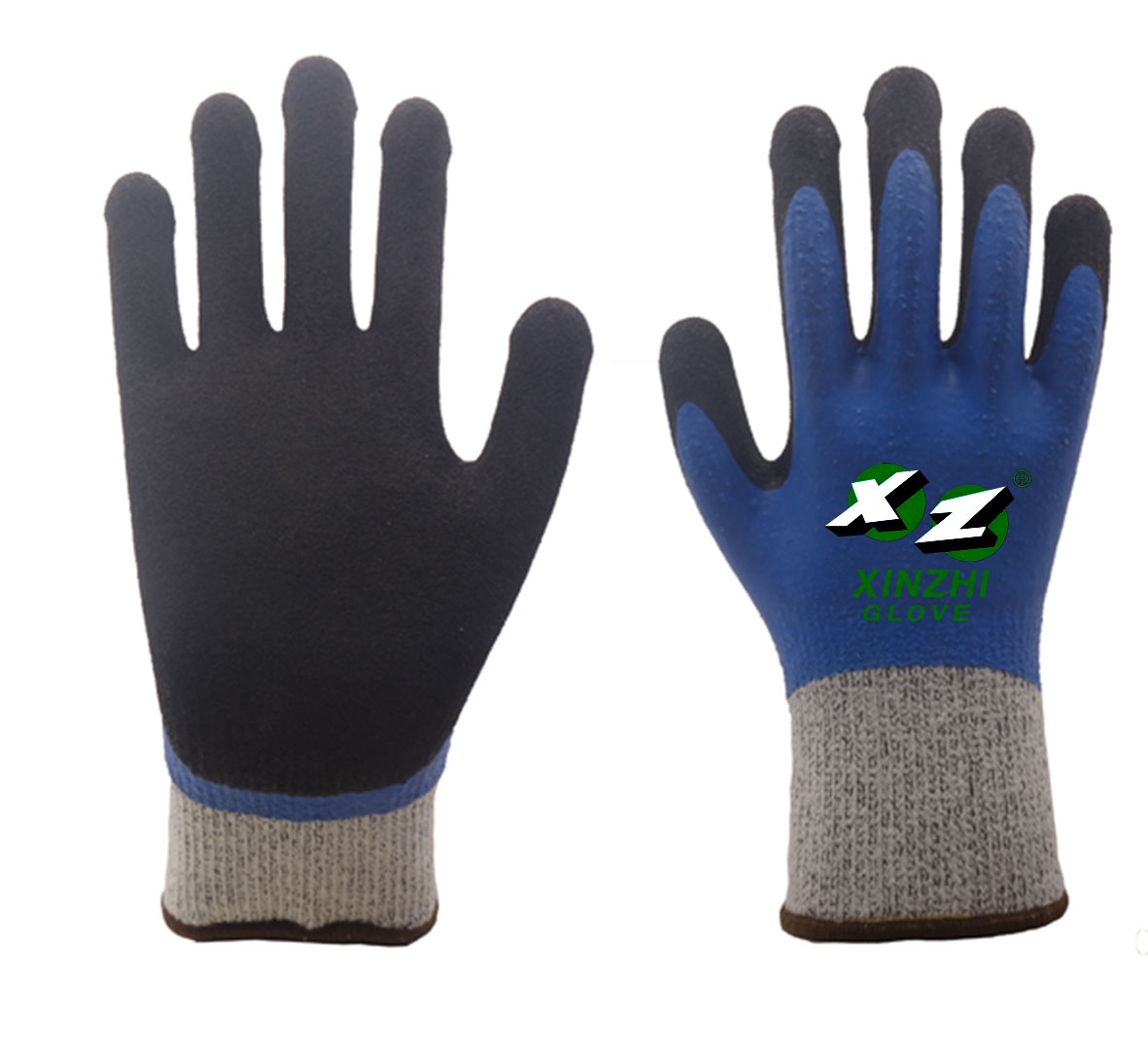
At first glance, nitrile-coated nylon gloves appear straightforward. A lightweight knitted nylon liner forms the base, while a layer of nitrile coating is applied to the palm, fingers, or entire glove. In practice, this structure creates a balance between flexibility and protection that is difficult to achieve with heavier glove types.
The nylon liner provides elasticity, breathability, and a close fit. Unlike cotton liners, nylon fibers maintain their shape better over time and resist moisture absorption. This means the glove remains lighter during use, even in humid or sweaty conditions.
The nitrile coating acts as a protective barrier. Nitrile is a synthetic rubber known for its resistance to oils, fuels, and many chemicals. When bonded to a flexible liner, it offers grip and durability without significantly restricting hand movement.
The effectiveness of this combination becomes clear when gloves are worn for extended periods. Workers are not simply protecting their hands; they are performing repetitive, precision-based tasks that demand both dexterity and reliability.
When Grip Is More Important Than Cushioning
One of the clearest situations where nitrile-coated nylon gloves outperform other work gloves is in environments where grip matters more than impact cushioning. In many industrial settings, dropped tools, slipping components, and unstable handling lead to inefficiency and accidents.
Nitrile coatings provide a naturally high coefficient of friction, especially when formulated with textured or sandy finishes. This makes them particularly effective when handling smooth metal parts, oily components, or plastic packaging.
Traditional leather gloves offer good abrasion resistance but often struggle in oily conditions. Cotton gloves absorb oil and quickly lose grip. PVC-coated gloves can become stiff in colder environments. Nitrile maintains flexibility across a wider temperature range and continues to grip even when surfaces are contaminated.
This advantage becomes critical in tasks such as assembly work, machine operation, automotive maintenance, and material handling, where a secure grip reduces both fatigue and error rates.
Dexterity and Precision-Based Tasks
Another key reason to choose nitrile-coated nylon gloves is when tasks require fine motor control. Gloves that are too thick or rigid force workers to overcompensate, increasing hand strain and slowing productivity.
Nitrile-coated nylon gloves are designed to fit closely to the hand. The thin nylon liner follows natural hand movement, while the coating is applied only where protection is needed. This allows workers to pick up small components, operate controls, and perform detailed assembly without constantly removing their gloves.
In contrast, cut-resistant gloves or heavy-duty impact gloves often sacrifice dexterity for protection. While necessary in high-risk environments, they are inefficient for tasks that require speed and precision.
Choosing nitrile-coated nylon gloves makes sense when protection needs to coexist with tactile sensitivity, rather than replace it.
Oil and Grease Exposure Environments
Oil resistance is one of nitrile’s defining characteristics. In environments where contact with lubricants, hydraulic fluids, or petroleum-based substances is frequent, glove material choice becomes critical.
Latex gloves degrade quickly when exposed to oils and solvents. PVC coatings can swell or harden over time. Leather absorbs oil, becoming heavy and slippery. Nitrile resists these substances without breaking down, maintaining both grip and structural integrity.
This makes nitrile-coated nylon gloves a practical choice for:
-
Automotive repair and maintenance
-
Machinery servicing
-
Metal processing
-
Equipment assembly lines
In these environments, glove failure does not happen suddenly. It happens gradually, through loss of grip, surface cracking, or liner breakdown. Nitrile’s resistance slows this degradation, extending usable glove life.
Long Wearing Comfort and Reduced Fatigue
Comfort is often underestimated in glove selection, yet it directly affects how consistently workers wear protective equipment. Gloves that cause discomfort are removed whenever possible, defeating their purpose.
Nylon liners are lightweight and breathable compared to cotton or thicker synthetic blends. They wick moisture away from the skin, reducing the clammy feeling associated with prolonged glove use. Nitrile coatings, when properly formulated, remain flexible rather than stiffening with movement.
Over a full work shift, this combination reduces hand fatigue. Workers experience less resistance when opening and closing their hands, and less heat buildup. This becomes especially important in high-repetition tasks, where even small comfort improvements compound over time.
When comfort directly supports compliance and productivity, nitrile-coated nylon gloves offer a measurable advantage.
Durability Versus Disposable Solutions
In some workplaces, disposable gloves are used for tasks involving light protection or contamination control. While disposables have their place, they are rarely cost-effective for mechanical or industrial work.
Nitrile-coated nylon gloves sit between disposable gloves and heavy-duty protective gloves. They are reusable, washable in many cases, and designed to withstand abrasion and repeated handling.
Compared to disposable nitrile gloves, they offer far greater mechanical strength. Compared to thick rubber gloves, they allow better airflow and flexibility.
This makes them a logical choice when tasks require repeated glove use throughout the day rather than frequent replacement.
Comparing Nitrile Coated Nylon Gloves With Other Common Work Gloves
Choosing nitrile-coated nylon gloves often comes down to understanding trade-offs rather than absolute superiority.
Cotton gloves are inexpensive and breathable but offer minimal protection and poor grip in oily conditions. Latex gloves provide elasticity but can cause allergic reactions and degrade quickly when exposed to oils. PU-coated gloves offer excellent dexterity but typically lack the oil resistance and abrasion durability of nitrile.
Leather gloves excel in heavy abrasion and heat resistance, but limit fine movement and absorb contaminants. Cut-resistant gloves are essential in high-risk environments, but are over-engineered for light to medium-duty tasks.
Nitrile-coated nylon gloves fill a specific space. They are best suited to environments that demand grip, flexibility, oil resistance, and extended wear comfort without extreme cut or impact hazards.
When Sandy Nitrile Coating Makes a Difference
Not all nitrile coatings are the same. Sandy or textured nitrile finishes introduce micro-roughness on the glove surface, significantly improving grip in wet or oily conditions.
This type of coating is particularly effective when handling smooth metal parts, glass, or components with residual lubricants. The texture increases contact points, reducing slippage without increasing coating thickness.
Sandy nitrile coatings are commonly chosen in industries where gloves must perform reliably under contamination rather than ideal dry conditions. The added grip can reduce the force required to hold objects, further lowering hand fatigue.
Temperature and Seasonal Considerations
Nitrile-coated nylon gloves perform consistently across a wide temperature range. Unlike PVC coatings, which can harden in cold environments, nitrile retains flexibility. Unlike thick insulated gloves, they do not cause excessive heat buildup in warmer conditions.
This makes them suitable for year-round use in indoor facilities and many outdoor working environments, especially when tasks involve frequent hand movement rather than static exposure to cold.
For extreme cold or heat, specialized gloves are still required. However, for moderate conditions where versatility is valued, nitrile-coated nylon gloves offer a balanced solution.
Maintenance and Replacement Cycles
Another practical consideration is how gloves are maintained and replaced. Nitrile-coated nylon gloves are often easier to standardize across teams due to their consistent sizing, predictable wear patterns, and relatively long service life.
They can be replaced based on visible wear rather than sudden failure. This predictability simplifies inventory planning and reduces downtime caused by glove shortages or unsuitable replacements.
In contrast, disposable gloves require constant replenishment, and heavier gloves may be reserved for specific tasks, complicating distribution.
Cost Efficiency Over Time
While nitrile-coated nylon gloves may cost more per pair than basic cotton gloves, their performance over time often results in lower overall cost. Reduced replacement frequency, fewer dropped parts, and improved worker efficiency all contribute to this equation.
Cost should not be evaluated solely on purchase price. When gloves directly influence task speed, error rates, and worker comfort, their true value becomes clearer.
This long-term perspective is one of the main reasons nitrile-coated nylon gloves have become standard in many industrial environments.
Situations Where They Are Not the Best Choice
It is equally important to recognize when nitrile-coated nylon gloves are not appropriate. They are not designed for extreme cut hazards, high-temperature exposure, or heavy impact protection.
In environments involving sharp blades, molten materials, or heavy crushing risks, specialized gloves with reinforced protection are necessary. Nitrile-coated nylon gloves are a precision tool, not a universal solution.
Selecting work gloves should never be reduced to a single specification or material name. It is a decision shaped by task requirements, environmental conditions, and human factors.
Nitrile-coated nylon gloves excel when work demands grip, flexibility, oil resistance, and comfort over long periods. They outperform many alternatives in environments where control matters more than bulk and where reliability is measured over weeks rather than minutes.
Understanding when to choose them is ultimately about respecting the complexity of hand protection. When gloves align with the realities of the job, they become tools rather than obstacles.
In that context, nitrile-coated nylon gloves are not simply popular. They are practical, proven, and well-suited to the modern industrial workplace.