



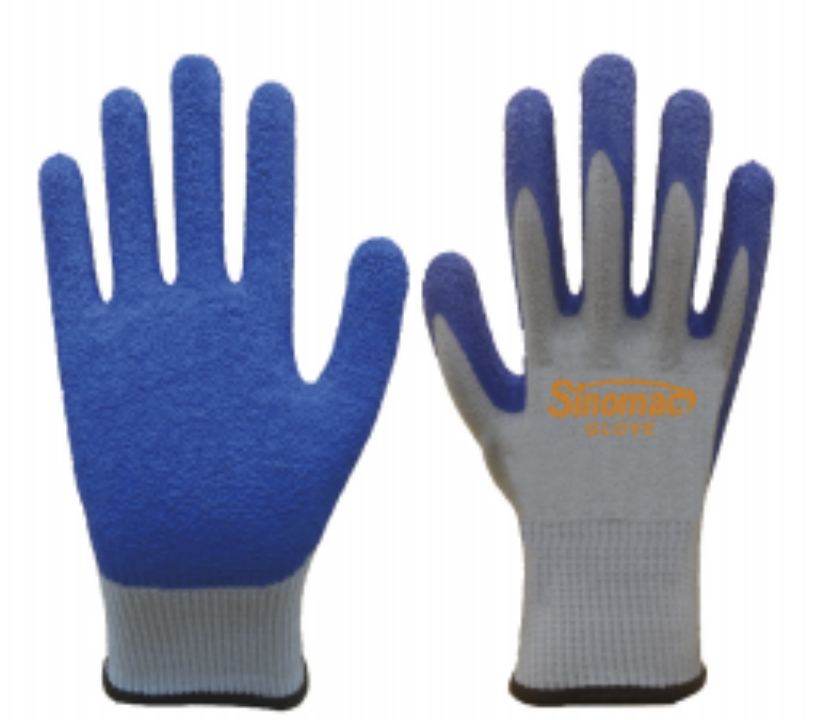
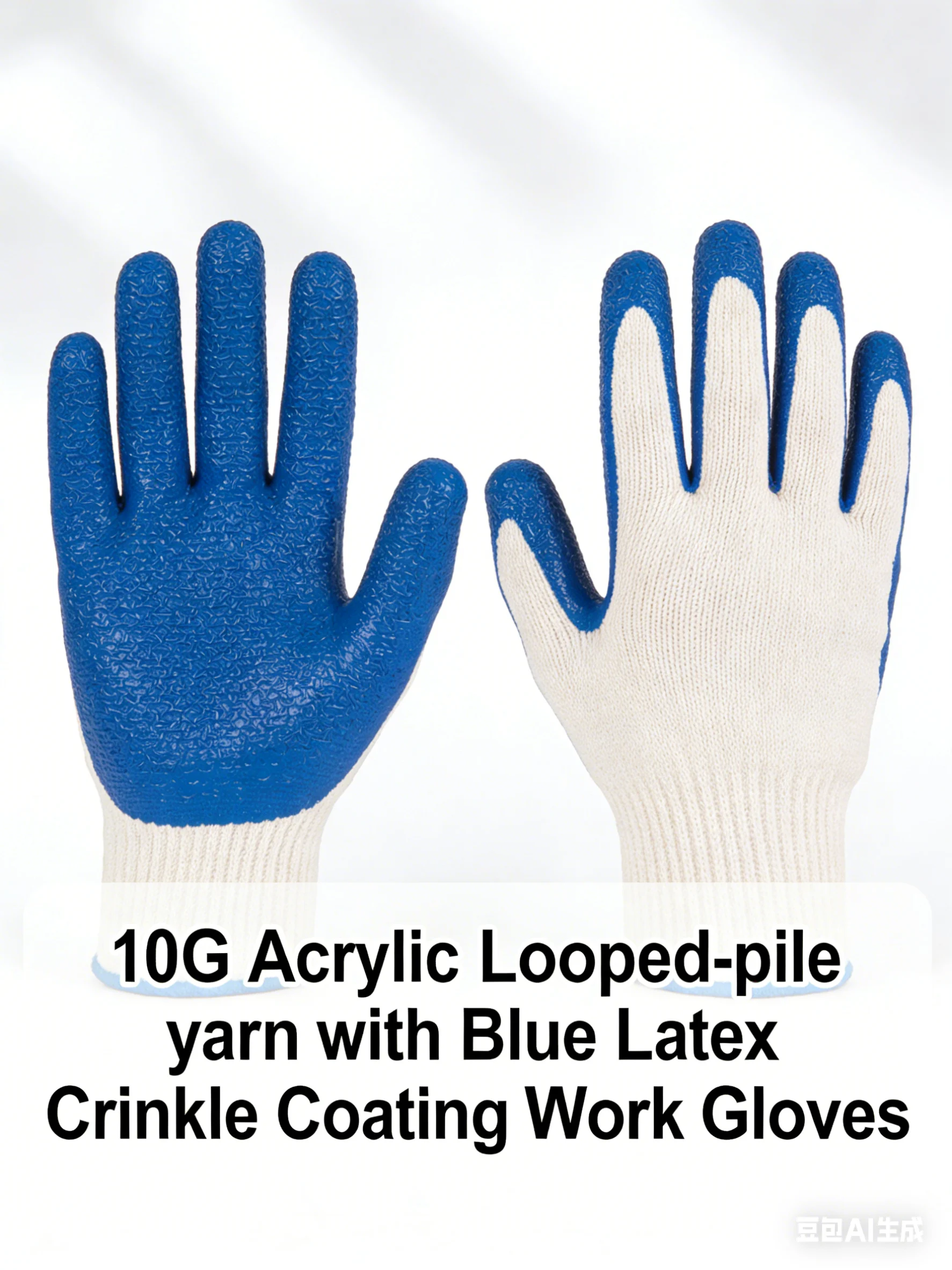
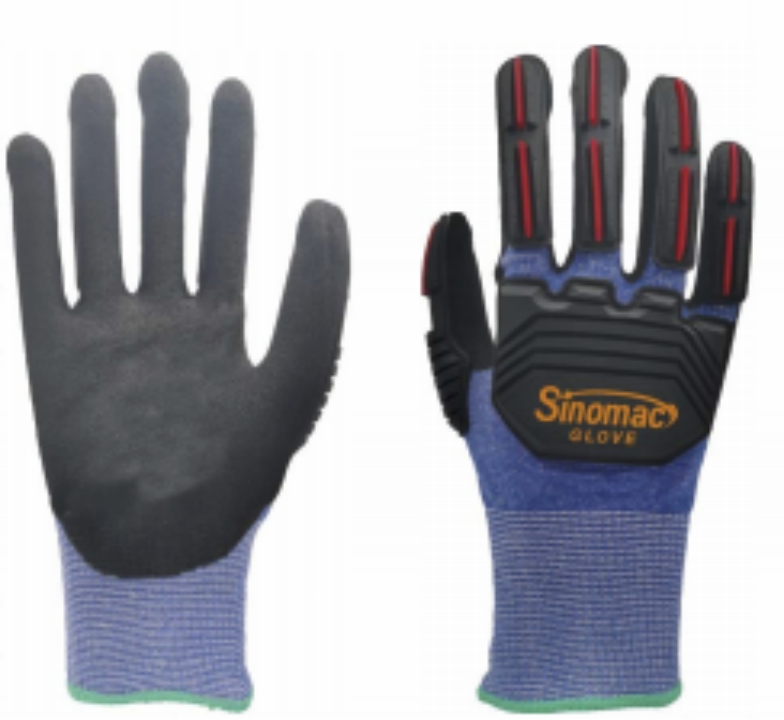
In many industrial environments, hands do far more than simply “handle” materials. They align sharp-edged components, guide fast-moving parts, grip smooth surfaces that resist friction, and repeat the same fine movements for hours at a time. In these situations, gloves are not just protective gear. They are tools. And like any good tool, they need to strike a careful balance between sensitivity and strength.
PU coated work gloves have earned their place as a preferred option in precisely these conditions. They are not the thickest gloves on the market, nor the most aggressively armored. Instead, they succeed by solving a subtler problem: how to protect hands without getting in their way.
This balance between precision and protection is the reason PU coated work gloves continue to appear on assembly lines, in logistics centers, inside fabrication workshops, and across countless industrial settings where control matters just as much as safety.
Precision Is Not a Luxury in Modern Workplaces
Modern industrial work has changed. Heavy, blunt-force tasks still exist, but a growing share of daily operations depend on accuracy, repeatability, and speed. Workers assemble electronics, fit metal components, handle glass panels, or sort packaged goods at a pace where even slight loss of dexterity becomes costly.
Bulky gloves reduce tactile feedback. Overly stiff coatings dull finger movement. Poor breathability causes fatigue long before a shift ends. These issues are not minor inconveniences. They directly affect productivity, error rates, and even long-term worker comfort.
PU coated work gloves address these concerns by keeping the glove structure light and responsive. The coating is thin, flexible, and evenly applied, allowing the underlying liner to move naturally with the hand. This makes it possible to grip small parts, feel surface textures, and maintain control without removing gloves between tasks.
Precision, in this context, is not about delicacy. It is about consistency. Gloves that allow reliable, repeatable movements reduce micro-errors that add up over time.
What PU Coating Actually Does (and Why It Feels Different)
Polyurethane, commonly referred to as PU, behaves differently from thicker rubber-based coatings. Instead of forming a heavy barrier on the glove surface, PU creates a fine, resilient layer that conforms closely to the liner beneath it.
This has several practical consequences.
First, PU coating enhances grip without relying on aggressive surface textures. It performs particularly well on dry or slightly oily surfaces, where control depends on friction rather than suction. This makes it suitable for handling metal sheets, tools, packaged goods, and smooth components.
Second, the coating remains flexible even during extended use. Where stiffer coatings may crack or stiffen over time, PU maintains elasticity, preserving finger mobility throughout the workday.
Third, PU coating adds abrasion resistance without significantly increasing thickness. This is important in tasks that involve frequent contact with rough edges or repeated surface friction, where uncoated gloves would wear out quickly.
The result is a glove that feels less like protective armor and more like a natural extension of the hand.
The Role of the Liner: Why 13 Gauge Matters
Coating alone does not define glove performance. The liner beneath it determines how the glove fits, breathes, and responds to movement.
In many PU coated work gloves designed for precision tasks, a 13-gauge liner is a common choice. Gauge refers to the fineness of the knit: higher numbers indicate thinner, more tightly knit yarns. A 13-gauge liner strikes a practical middle ground. It is thin enough to allow dexterity, yet dense enough to support durability and cut resistance when needed.
This structure allows the glove to fit closely to the hand, reducing slack and bunching. A closer fit improves control and minimizes the risk of snagging on equipment or materials. It also improves comfort, especially during repetitive tasks where friction inside the glove can irritate.
When paired with PU coating, a 13-gauge liner creates a glove that feels precise without being fragile.
When Protection Must Go Beyond the Surface
Precision alone is not enough in environments where sharp edges are part of the job. Sheet metal handling, glass processing, automotive assembly, and machinery maintenance all involve risks that demand cut protection.
Many PU coated work gloves integrate cut resistant fibers into the liner, allowing them to deliver protection without sacrificing flexibility. Materials such as Dyneema® are commonly used for this purpose. These fibers offer a high strength-to-weight ratio, meaning they resist cuts while remaining lightweight.
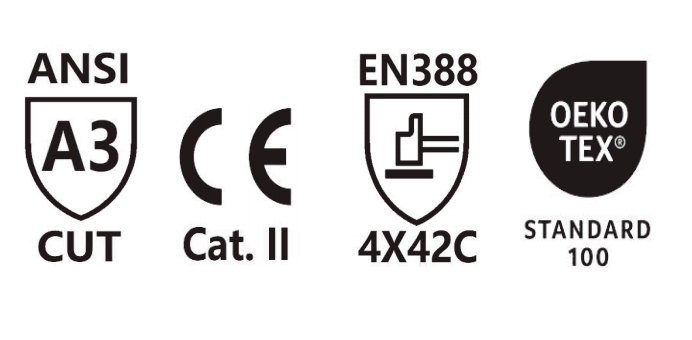
In gloves rated at A3 cut protection under ANSI standards, this balance becomes particularly relevant. A3 protection is sufficient for a wide range of industrial tasks involving moderate cut risks, without pushing the glove into the stiff, heavy category associated with higher cut levels.
This makes PU coated work gloves with cut resistance especially appealing in mixed-risk environments, where workers need both protection and control throughout the same shift.
Why PU Coated Work Gloves Feel Less Fatiguing Over Time
Fatigue is an often-overlooked factor in hand protection. Gloves that are too stiff, too warm, or poorly fitted increase muscle strain and reduce endurance.
PU coated work gloves tend to perform well here for several reasons.
They are lightweight, reducing the effort required to move the hands repeatedly.
They allow airflow through the liner, helping regulate temperature and moisture.
They flex naturally with hand movement, minimizing resistance during gripping and releasing.
Over the course of a full shift, these characteristics translate into less hand fatigue and more consistent performance. Workers are less likely to remove gloves for comfort reasons, which in turn improves safety compliance.
PU Coating Compared with Other Common Coatings
Different coatings solve different problems, and understanding these differences clarifies why PU is often chosen for precision-focused work.
Compared with nitrile coatings, PU is generally thinner and more flexible. Nitrile excels in oil resistance and durability but can feel heavier and less responsive in fine tasks. PU prioritizes sensitivity and comfort.
Latex coatings provide excellent elasticity and grip but are less suitable in environments where latex allergies are a concern. PU avoids this issue while offering similar flexibility.
PVC coatings are durable and cost-effective but tend to be thicker and less breathable, making them better suited for rough handling rather than precision work.
PU sits in a specific niche. It is not designed to dominate extreme conditions but to perform reliably where control and protection must coexist.
Typical Applications Where PU Coated Work Gloves Excel
PU coated work gloves appear most often in environments where tasks are detailed, repetitive, or require controlled grip rather than brute force.
They are widely used in:
-
Assembly lines involving small or medium-sized components
-
Automotive and electronics manufacturing
-
Warehousing, sorting, and order fulfillment
-
Metal and glass handling where edges are present but not extreme
-
General maintenance and machinery operation
In these settings, gloves are worn continuously rather than occasionally. Comfort and dexterity therefore, matter just as much as basic protection.
How PU Coated Gloves Support Productivity
Safety equipment is sometimes seen as a necessary compromise. PU coated work gloves challenge that assumption by actively supporting productivity.
Better grip reduces dropped items and rework.
Improved dexterity speeds up assembly and handling.
Comfort encourages consistent glove use, reducing interruptions.
These effects are subtle but cumulative. Over thousands of repetitions, small efficiency gains translate into measurable improvements in output and quality.
From a management perspective, this makes PU coated work gloves not just a safety choice, but an operational one.
A Practical Look at Features That Matter Most
When evaluating PU coated work gloves for real-world use, several features consistently prove more important than marketing claims:
-
Fit that follows the natural shape of the hand
-
Even, well-adhered PU coating without excessive thickness
-
A liner that balances breathability with structural support
-
Sufficient cut resistance for the actual risk level, rather than overprotection
These elements determine whether a glove becomes a reliable daily tool or an obstacle workers avoid.
Matching Gloves to the Job, Not the Other Way Around
One reason PU coated work gloves have become a default choice is their adaptability. They work well across a wide range of tasks without demanding constant glove changes.
This versatility reduces inventory complexity and simplifies training. Workers learn one glove behavior and trust it across different operations, instead of switching between multiple specialized options.
In environments where tasks shift throughout the day, this flexibility is especially valuable.
Durability Without Excess
PU coated work gloves are not disposable, but they are also not designed to last forever under extreme abuse. Their durability lies in resisting abrasion and maintaining performance over repeated use, rather than surviving the harshest possible conditions.
This aligns with their role. They are optimized for daily, precision-oriented work, not demolition or heavy construction. Used within their intended scope, they deliver a strong balance between lifespan and performance.
Why the Market Keeps Returning to PU Coated Gloves
Trends in industrial safety come and go, but PU coated work gloves have remained a steady presence. This is not due to novelty or branding, but to practical performance.
They solve a real problem: protecting hands without slowing them down.
As manufacturing becomes more precise and workflows more refined, equipment that supports human skill rather than restricting it gains value. PU coated work gloves fit naturally into this evolution.
They are not flashy. They are simply effective.
At their best, protective gloves should not fight the worker’s movements. They should quietly support them. PU coated work gloves succeed because they respect the skill of the person wearing them.
They provide just enough barrier to reduce risk, just enough grip to maintain control, and just enough flexibility to stay out of the way. That balance is harder to achieve than it looks, and it explains why these gloves have become a go-to choice across so many industries.
In the end, precision and protection are not opposites. With the right materials and design, they reinforce each other. PU coated work gloves are proof of that principle in everyday practice.