



Abstract
This comprehensive guide is designed for B2B buyers seeking bulk procurement of A6 Cut Resistant Safety Gloves in the 18-gauge, PU palm-coated configuration. We examine technical specifications, compliance standards, supplier evaluation criteria, and total cost of ownership considerations for industrial safety applications where superior cut protection and dexterity are non-negotiable.
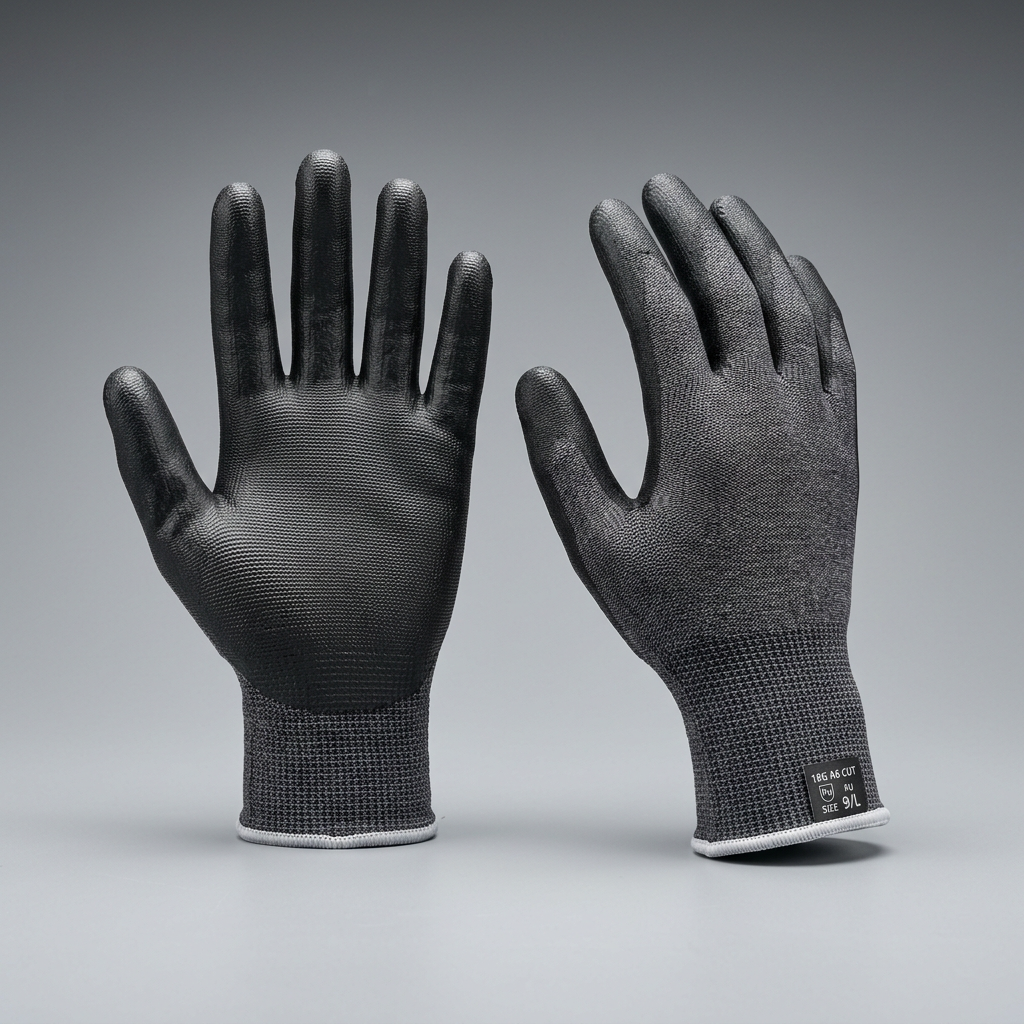
For procurement managers, safety coordinators, and distribution partners evaluating wholesale glove suppliers, this analysis delivers actionable insights into material performance metrics, certification verification protocols, and strategic sourcing methodologies. The 18-gauge A6 Cut Resistant Safety Gloves strike a critical balance between maximum cut protection and operational dexterity—making them indispensable for automotive assembly, metal fabrication, glass handling, and precision manufacturing environments. According to OSHA data, hand injuries account for 20–30% of workplace incidents in these sectors, underscoring the value of investing in proven hand protection solutions.
Understanding A6 Cut Resistance Standards and 18 Gauge Construction
ANSI/ISEA 105 A6 Rating Explained
The A6 cut resistance classification under ANSI/ISEA 105-2016 represents a gram force threshold of 2200-2999 grams in TDM-100 testing methodology. This positions A6 gloves in the second-highest protection tier, suitable for handling sharp metal components, stamped steel parts, and industrial glass with edge exposure risks. The testing protocol involves a circular rotating blade under standardized pressure conditions, measuring the force required to penetrate the glove material within a 20mm cut distance.
Critical performance distinctions exist between adjacent ratings: A5 gloves (1620-2199 grams) may fail in environments with continuous sharp edge contact, while A7 gloves (3000-3999 grams) sacrifice significant dexterity due to thicker fiber construction. The A6 rating delivers 35-40% greater cut protection than A5 alternatives while maintaining 80-85% of baseline tactile sensitivity—a crucial specification for assembly operations requiring component identification and precision handling.
For bulk buyers, understanding test method variations matters significantly. EN 388:2016 employs the Coup Test (different blade geometry) and introduces the ISO 13997 TDM test for materials that dull blades. Suppliers should provide dual certification data: ANSI A6 ratings typically correlate to EN 388 Level D or E performance (1500-2500 Newtons), but material composition variations can create discrepancies requiring independent verification.
18 Gauge Knit Technology Benefits
The 18-gauge specification refers to needle density per inch in circular knitting machines—directly impacting fiber compactness and glove thickness. Higher gauge numbers produce thinner, more flexible constructions: 18-gauge gloves measure 0.8-1.2mm in shell thickness compared to 1.5-2.0mm for 13-gauge alternatives. This translates to measurable dexterity advantages in standardized testing, with 18-gauge constructions achieving 95-98% grip retention scores versus baseline bare-hand performance.
Fiber density affects cut protection delivery mechanisms. In 18-gauge A6 gloves, manufacturers achieve the required gram force resistance through advanced yarn engineering—typically HPPE (High-Performance Polyethylene) blended with fiberglass or steel wire at 15-25% concentration. The tighter-knit structure distributes cut forces across more fiber intersection points, creating redundant protection layers without bulk accumulation.
Operational implications for bulk buyers include reduced hand fatigue during extended shifts. Ergonomic studies demonstrate 18-gauge gloves reduce grip force requirements by 12-18% compared to 13-gauge equivalents in repetitive assembly tasks, directly impacting productivity metrics. However, the thinner construction demands higher-quality yarn inputs—a cost factor reflected in wholesale pricing that buyers must balance against reduced replacement frequency and improved worker compliance rates.
Technical Specifications for Bulk Procurement
PU Palm Coating Performance Characteristics
Polyurethane palm coatings serve dual functions: enhancing grip performance while protecting the cut-resistant shell from abrasion degradation. Premium formulations achieve 1.2-1.5 coefficient of friction values in dry conditions and maintain 0.8-1.0 COF in light oil exposure—critical for automotive parts handling and machined component assembly. The coating thickness standard ranges 30-50 microns: thinner applications (30-35 microns) maximize breathability for climate-controlled environments, while 45-50 micron coatings extend abrasion life in heavy industrial settings.
PU chemistry offers distinct advantages over nitrile alternatives in specific applications. Polyurethane maintains superior flexibility at temperature extremes (-10°C to +60°C operational range), critical for cold storage and outdoor construction applications. The material exhibits lower compression set values, meaning the coating rebounds effectively after grip stress—extending functional lifecycle in repetitive gripping operations. However, PU demonstrates lower chemical resistance than nitrile: exposure to strong solvents or petroleum products degrades coating integrity within 40-60 hours of cumulative contact.
For bulk procurement specifications, buyers should require coating adhesion testing data. Premium manufacturers employ plasma treatment or chemical primers, achieving >8 N/cm peel strength between coating and shell—preventing delamination that compromises both grip and cut protection. Request batch testing documentation showing abrasion resistance cycles (typically 8,000-12,000 cycles per EN 388 standards) and coating uniformity measurements across size runs.
Material Composition and Durability Metrics
A6-rated 18-gauge gloves utilize engineered fiber blends, optimizing multiple performance parameters. Common compositions include:
- HPPE/Glass Fiber Blends (70/30 ratio): Balances cut protection with cost efficiency, typical lifecycle 25-35 industrial wash cycles
- HPPE/Stainless Steel (80/20 ratio): Enhanced durability and heat resistance, 40-50 wash cycle lifespan, 15-20% price premium
- HPPE/Nylon/Spandex Composites: Maximum comfort and fit retention, 30-40 wash cycles, superior dimensional stability
Dimensional stability represents a critical durability metric often overlooked in initial procurement decisions. Low-quality gloves exhibit 8-12% shrinkage after 10 wash cycles, causing size migration and increased replacement costs. Specify maximum allowable shrinkage of 5% in procurement contracts, verified through ISO 6330 standardized laundering protocols.
Expected lifecycle varies significantly by application intensity. Light assembly environments (electronics, precision manufacturing) achieve 60-80 uses per pair with proper rotation protocols. Heavy industrial applications (metal stamping, glass cutting) reduce the lifecycle to 25-35 uses. Calculate total cost per use rather than unit price: a glove priced at $2.50 lasting 50 uses ($0.05/use) outperforms a $1.80 glove lasting 20 uses ($0.09/use).
| Specification | A6 18-Gauge PU | A5 13-Gauge Nitrile | A6 15-Gauge PU |
|---|---|---|---|
| Cut Resistance | 2200-2999g | 1620-2199g | 2200-2999g |
| Shell Thickness | 0.9-1.2mm | 1.5-1.8mm | 1.2-1.5mm |
| Dexterity Score | 95-98% | 75-82% | 85-90% |
| Typical Lifecycle | 30-50 uses | 40-60 uses | 35-55 uses |
| Price Range (MOQ 1000+) | $2.20-$3.50 | $1.50-$2.40 | $2.80-$4.20 |
| Best Applications | Precision assembly, glass handling | Heavy fabrication | General manufacturing |
Compliance and Certification Requirements
Mandatory Safety Standards for Industrial Markets
EN 388:2016 certification remains the global benchmark for mechanical risk protective gloves, displaying a four or six-digit pictogram code indicating abrasion, cut, tear, and puncture resistance levels. For A6 gloves, verify that the cut resistance letter (D or E) corresponds to the claimed ANSI performance. The 2016 standard revision introduced mandatory ISO 13997 testing for materials scoring maximum Coup Test results—critical for validating high-performance cut claims.
FDA 21 CFR Part 177.1520 compliance becomes mandatory for food processing applications. This regulation governs polyurethane formulations contacting food products, restricting extractable substances, and requiring migration testing. Suppliers serving food industry clients must provide FDA compliance letters and specify coating formulations meeting these standards—typically adding 8-12% to manufacturing costs reflected in wholesale pricing.
REACH (Registration, Evaluation, Authorization of Chemicals) compliance affects EU market access. The regulation restricts 224+ substances in textile manufacturing, including certain dyes, flame retardants, and plasticizers. Request REACH declarations and SVHC (Substances of Very High Concern) testing reports from suppliers. Non-compliance risks, customs seizures,s and liability exposure—critical considerations for distributors serving European markets.
Supplier Certification Verification
ISO 9001:2015 certification indicates systematic quality management but requires verification depth. Request certificate scope confirmation covering glove manufacturing (not just trading operations) and audit the certification body’s accreditation status through IAF (International Accreditation Forum) databases. Legitimate certificates display accreditation marks (ANAB, UKAS, etc.) and specific manufacturing site addresses.
Third-party testing validation should include:
- Complete test reports showing specimen preparation, conditioning protocols, and individual test results (not just pass/fail summaries)
- Laboratory accreditation to ISO 17025 standards for mechanical testing
- Batch traceability systems linking production lots to raw material certifications and test documentation
- Annual recertification schedules ensure ongoing compliance
Implement supplier audit protocols examining raw material receiving inspection procedures, in-process quality checkpoints (coating thickness measurement, visual defect rates), and finished goods testing frequency. Premium manufacturers conduct 100% visual inspection and statistical sampling (AQL 1.5-2.5 standards) for performance testing—expect to pay 12-18% premiums for this quality assurance level.
Supplier Evaluation and Bulk Ordering Strategy
Key Criteria for Wholesale Glove Suppliers
Minimum Order Quantity flexibility directly impacts inventory carrying costs and cash flow management. Tier-1 manufacturers typically enforce 5,000-10,000 pair MOQs per size/specification, while trading companies offer 1,000-2,000 pair flexibility at 8-15% price premiums. For distributors testing new market segments, negotiate mixed-container privileges allowing multiple SKU combinations meeting total volume thresholds.
Customization capabilities extend beyond simple logo printing. Evaluate suppliers offering:
- Proprietary sizing systems (half-sizes, extended cuff lengths) improve fit and reduce return rates
- Custom packaging solutions (retail-ready blister packs, bulk dispenser boxes), reducing downstream handling costs
- Private labeling programs with brand protection agreements preventing direct customer solicitation
- Color coding options for size identification or departmental assignment systems
Lead time guarantees require contractual specificity. Standard production runs span 25-35 days from deposit to container loading, but material shortages or peak season demand (September-November in Northern Hemisphere markets) extend timelines to 45-60 days. Negotiate penalty clauses for delays exceeding agreed timelines and establish safety stock protocols for critical SKUs.
Defect rate Service Level Agreements should specify:
- Maximum allowable defect rates (industry standard: 1.5-2.5% for visual defects, 0.3-0.5% for performance failures)
- Inspection and claims procedures with photographic documentation requirements
- Replacement or credit terms, including freight responsibility allocation
- Root cause analysis protocols for systematic quality issues
Total Cost of Ownership Analysis
Unit price represents only 40-55% of total acquisition costs in landed cost models. Comprehensive TCO analysis includes:
Logistics Optimization: A 40-foot container accommodates 180,000-220,000 pairs depending on packaging density. Negotiate FOB pricing,g allowing carrier selection control—potential 12-18% freight savings through consolidator relationships. Calculate per-pair logistics costs: a $4,500 container cost divided by 200,000 pairs adds $0.0225/pair to landed costs.
Quality-Adjusted Pricing: Compare suppliers on performance-per-dollar metrics. A glove priced at $2.80 with a 45-use lifecycle delivers $0.062/use cost versus a $2.20 glove with 25-use lifecycle at $0.088/use—a 42% TCO difference despite lower unit pricing.
Inventory Carrying Costs: Apply 20-25% annual carrying cost factors (warehousing, insurance, obsolescence risk, capital cost) to average inventory values. Just-in-time procurement strategies reduce these costs but require supplier reliability and may sacrifice 5-8% volume pricing discounts.
Hidden Cost Factors:
- Customs duties and compliance costs (2-8% of declared value, depending on origin and destination)
- Quality inspection services (0.3-0.5% of order value for third-party verification)
- Returns processing and defective product disposal (1-2% of order value for typical defect rates)
- Size mix optimization (poor size distribution increases obsolescence costs by 8-15%)
Develop supplier scorecards weighting price (35%), quality consistency (30%), delivery reliability (20%), and service responsiveness (15%). Quarterly performance reviews identify optimization opportunities and provide leverage for continuous improvement negotiations.
FAQ
Q1: What is the typical MOQ for 18-gauge A6 cut-resistant gloves from Chinese manufacturers?
Direct manufacturers typically require 5,000-10,000 pairs per specification as minimum production runs, though this can be distributed across size ranges (S-XXL). Trading companies and consolidators offer 1,000-2,000 pair MOQs at 10-18% price premiums. For initial market testing, consider mixed-container strategies combining multiple glove types to meet volume thresholds while reducing per-SKU commitment. Negotiate annual volume commitments for MOQ reductions—suppliers often waive minimums for established customers projecting 50,000+ annual pair volumes.
Q2: How do PU-coated gloves compare to nitrile coatings for oil-handling tasks?
Polyurethane maintains adequate grip in light oil exposure (coefficient of friction 0.8-1.0) but degrades under prolonged petroleum contact, with coating breakdown occurring after 40-60 cumulative exposure hours. Nitrile coatings deliver superior chemical resistance and maintain grip performance in heavy oil environments (COF 0.9-1.2), making them preferable for automotive maintenance and machining operations. However, PU offers better flexibility in cold conditions and lower dermatitis incidence rates. For mixed-task environments, consider dual-inventory strategies: PU gloves for dry/light-oil assembly work, nitrile for dedicated oil-handling stations.
Q3: Can A6 gloves be laundered for reuse in food processing environments?
Yes, with proper protocols. Select gloves with FDA-compliant PU coatings and specify launderable constructions tested to ISO 6330 standards. Use neutral pH detergents (pH 6.5-7.5) at 40-60°C water temperatures—higher temperatures or alkaline detergents accelerate fiber degradation. Implement rotation systems ensuring 24-48 hour drying periods between uses, as moisture retention promotes bacterial growth and reduces cut protection effectiveness. Track wash cycles per pair (maximum 30-40 cycles for A6 gloves) and establish retirement criteria based on visible wear indicators: coating delamination, fiber pilling, or >5% dimensional changes. Laundering programs reduce per-use costs by 60-75% versus disposable protocols but require infrastructure investment and hygiene monitoring systems.
Conclusion
Strategic bulk procurement of 18-gauge A6 Cut-Resistant Safety Gloves with PU coating demands systematic evaluation across technical performance, compliance verification, and total cost optimization dimensions. The A6 rating of these safety gloves delivers critical protection for high-risk industrial applications, while the 18-gauge construction preserves operational dexterity—a combination that effectively serves automotive assembly, metal fabrication, glass handling, and precision manufacturing sectors.
Successful sourcing strategies for A6 Cut Resistant Safety Gloves prioritize supplier certification validation over unit price minimization, recognizing that quality consistency and lifecycle performance determine true acquisition costs. Implement rigorous verification protocols for ANSI/ISEA 105, EN 388, and industry-specific certifications (FDA, REACH), while establishing performance-based supplier scorecards that balance price, quality, delivery, and service metrics.
Total cost of ownership analysis reveals that A6 Cut Resistant Safety Gloves priced 20–30% higher frequently deliver superior value through extended lifecycles, reduced defect rates, and improved worker compliance. Calculate cost-per-use metrics incorporating logistics optimization, inventory carrying costs, and application-specific durability expectations. For procurement managers navigating complex supplier landscapes, prioritize long-term partnership development with manufacturers demonstrating technical competency, quality system maturity, and collaborative problem-solving capabilities—attributes that sustain competitive advantage beyond transactional price negotiations.